AI garden will it grow infinite?
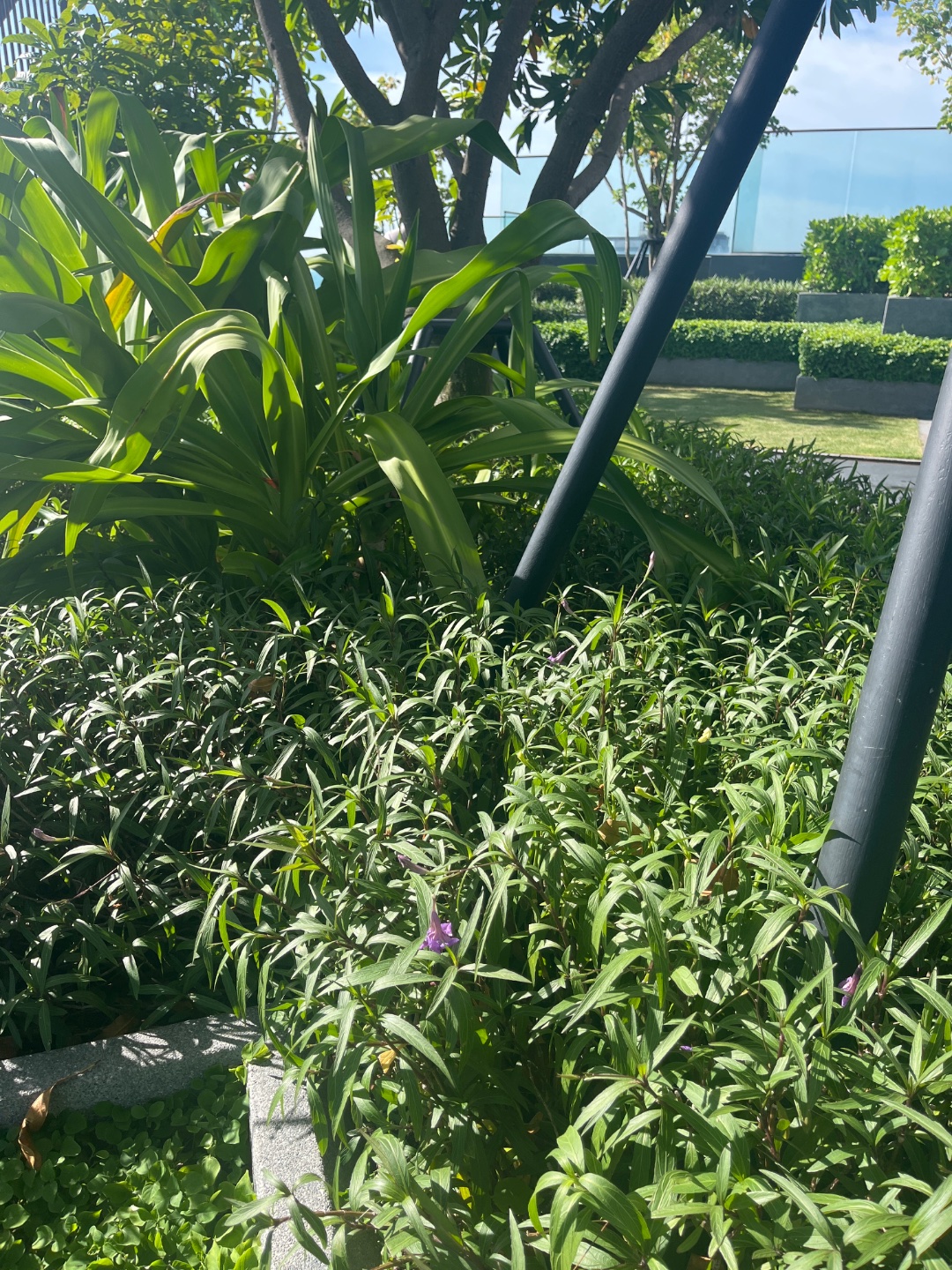
The Little Garden That Started It All
Picture this. One spring morning, you decide to start a small garden. You clear a patch of soil, plant a few seeds, water them, and wait. Within weeks, something magical happens. Tiny green shoots push through the dirt. They climb higher, leaves unfurl, flowers bloom. The garden seems unstoppable, growing more lush and vibrant by the day.
But here's the thing you eventually notice: the garden doesn't grow forever.
At some point, the tomato plants stop getting taller. The flowers reach their full size and no further. Why? Because the garden runs into limits. There's only so much sunlight hitting that patch of soil. Only so much water in the ground. Only so many nutrients in the dirt. Only so much physical space for roots to spread. The garden reaches what biologists call a saturation point—a ceiling beyond which growth simply cannot continue, no matter how much you wish it would.
Now here's the question that should genuinely keep you up at night: Is artificial intelligence like that garden?
AI is growing right now at a pace that feels almost magical, just like those first weeks of green shoots. Every few months, a new model arrives that's smarter, faster, and more capable than the last. It feels unstoppable. It feels infinite.
But gardens taught us something important. Everything that grows eventually meets its limits.
So which is it? Will AI keep growing forever toward some unimaginable superintelligence? Or will it, like every garden ever planted, hit a saturation point and stop?
Let's dig into the soil and find out.
The Explosive Growth We're Living Through
To understand where AI might be headed, we first need to appreciate just how wild its growth has been.
Think back just a handful of years. In 2018, the idea of having a fluent conversation with a computer felt like science fiction. By 2023, millions of people were chatting with AI systems every single day, asking them to write essays, debug code, plan vacations, and even offer emotional support. The leap was staggering.
This growth has followed a pattern that researchers have come to recognize. Make the AI model bigger—give it more data, more computing power, more parameters—and it gets noticeably smarter. This relationship became so reliable that researchers gave it a name: scaling laws. Bigger meant better. More fuel meant more fire.
It's exactly like the early days of your garden. You add good soil, plenty of water, and abundant sunlight, and the plants respond by shooting upward. The more resources you pour in, the more spectacular the growth.
For a while, this created a kind of intoxicating optimism in the AI world. If simply making things bigger made them smarter, then growth seemed limitless. Just keep scaling up. Keep building bigger models. Keep feeding them more.
But gardeners know a secret that AI enthusiasts are now beginning to learn the hard way.
When the Garden Hits the Wall
Let's go back to your backyard garden one more time.
You started with explosive growth, but eventually things slowed down. Imagine you decided to fight back against the slowdown. You doubled the water. The plants barely noticed. You added more fertilizer. A small improvement, then nothing. You tried to give them more sunlight, but the sun only shines so brightly.
This is the cruel mathematics of limits. In the beginning, small inputs create huge results. But as you approach the ceiling, you have to pour in enormous amounts of resources just to get tiny improvements. The return on your effort shrinks and shrinks until it nearly vanishes.
Economists call this the law of diminishing returns, and it haunts nearly every system that grows.
And here's the uncomfortable truth: AI is starting to bump into its own walls. Let's look at the four big limitations—the soil, water, sunlight, and space of the AI world.
Limitation One: Running Out of Data
Remember how your garden needs nutrients from the soil? AI feeds on data—the text, images, code, and information it learns from. For years, the internet provided a seemingly endless supply. AI systems were trained on enormous chunks of everything humans have ever written and posted online.
But here's the problem: there's a finite amount of high-quality human-created data in the world. AI companies have already consumed staggering portions of it. Researchers are now openly worried that we're approaching "peak data"—the point where there simply isn't enough fresh, high-quality human knowledge left to keep feeding ever-hungrier models.
It's like a garden that has absorbed nearly all the nutrients in its patch of soil. You can't just conjure more nutrients out of thin air.
Limitation Two: The Crushing Cost of Computing Power
Your garden needs sunlight, and AI needs computing power—massive farms of specialized chips that crunch numbers around the clock. The trouble is, these chips are expensive, energy-hungry, and increasingly hard to produce in the quantities needed.
Training a single cutting-edge AI model can cost hundreds of millions of dollars. And because of those diminishing returns, the next model might cost several times more while delivering only modest improvements. At some point, even the wealthiest tech giants have to ask: is it worth spending billions more for a slightly better result?
This is the equivalent of trying to give your garden more sunlight by building a giant artificial sun. Technically possible, perhaps, but the cost becomes absurd compared to the benefit.
Limitation Three: The Energy Ceiling
Here's a limitation many people overlook. AI doesn't just need chips—it needs electricity, and lots of it. The data centers powering modern AI consume staggering amounts of energy, comparable to entire cities.
There's a hard physical limit to how much energy we can generate and how much heat we can manage. You can't run an infinitely large AI on a planet with finite power grids. The garden can only soak up so much sunlight before the system simply can't deliver more.
Limitation Four: The Limits of the Approach Itself
This one is the most philosophically interesting. Maybe the problem isn't just resources. Maybe the method itself has limits.
Today's leading AI systems are, at their core, incredibly sophisticated pattern-matching machines. They predict what comes next based on what they've seen before. This works astonishingly well—but it may not be the path to genuine understanding, reasoning, or consciousness.
It's like discovering that no matter how much water and fertilizer you give your tomato plant, it will never grow into an oak tree. The fundamental nature of the thing sets a ceiling on what it can become. Some researchers believe today's AI approach has an inherent limit, and that to break through, we'll need entirely new ideas—not just bigger versions of what we already have.
But Wait—Gardens Aren't the Whole Story
Now, before we conclude that AI is doomed to slow down and plateau, let's challenge our own metaphor. Because here's where things get genuinely fascinating.
A simple garden has fixed limits. But what if the gardener could keep changing the rules?
What if, when the soil ran low on nutrients, the gardener invented a way to create new soil? What if, when sunlight became the bottleneck, they engineered plants that needed less light? What if the garden could redesign itself to overcome each limitation as it appeared?
Suddenly, the idea of a fixed ceiling looks shaky. And this is exactly what's happening in the world of AI.
Breakthrough One: Smarter, Not Just Bigger
For years, the strategy was simple: make models bigger. But as that approach hit walls, researchers got clever. They discovered that how you train and use AI matters as much as size. Techniques that help AI "think" through problems step by step, or use its computing power more efficiently, are producing dramatic improvements without requiring infinitely bigger models.
This is like a gardener learning to grow far more food in the same small plot through smarter techniques. The limit you thought was fixed turns out to be movable.
Breakthrough Two: AI Creating Its Own Data
Remember the worry about running out of data? Well, AI is increasingly capable of generating its own training material—what's called synthetic data. AI can create problems, solve them, check its own work, and learn from the results. In some areas, like mathematics and coding, this is already producing remarkable gains.
This is the garden growing its own fertilizer. The resource limitation that seemed so absolute suddenly has an escape hatch.
Breakthrough Three: New Architectures and New Ideas
The history of technology is full of moments when one approach hit its ceiling and an entirely new approach took its place. When propeller planes couldn't fly faster, jet engines arrived. When one type of computer chip reached its limits, new designs emerged.
AI research is bursting with new ideas—different ways of building systems, combining approaches, and rethinking the fundamentals. Each breakthrough has the potential to reset the growth curve entirely, launching a fresh wave of explosive progress just when things seemed to be slowing.
The S-Curve Stacked on S-Curves
So how do we make sense of all this? Is AI a garden that will plateau, or an unstoppable force that grows forever?
The honest answer is: probably neither, and both.
Here's the most useful way to think about it. Most technologies don't grow in a straight line forever, and they don't simply plateau and die either. Instead, they follow what's called an S-curve. Growth starts slow, then explodes upward, then levels off as it hits limits—just like our garden.
But here's the magic. Right when one S-curve flattens out, a new breakthrough often kicks off an entirely new S-curve. Growth that seemed to be ending suddenly begins again from a higher starting point. Stack enough of these S-curves on top of each other, and you get something that looks remarkably like continuous, long-term growth—even though each individual phase eventually saturates.
Think of it like a relay race. Each runner eventually tires and slows down. But just as one runner fades, they pass the baton to a fresh runner who sprints forward. The race keeps moving fast, not because any single runner is unstoppable, but because there's always a new one ready to take over.
AI may well be in the middle of one of these relays. The current approach—simply scaling up—might be approaching its limits, its runner beginning to tire. But new approaches are already taking the baton.
So, Infinite Growth or Saturation Point?
Let's return to the question that started this whole journey. Will AI grow infinitely, or will it reach a saturation point like your little garden?
Here's where I'll give you my honest take.
AI will absolutely hit saturation points. Every individual approach, every specific technique, every wave of progress will eventually run into walls—data limits, energy limits, cost limits, and the inherent limits of the methods themselves. Anyone who tells you AI will grow infinitely without ever slowing is ignoring the basic laws that govern every system in the universe. Even gardens, even economies, even galaxies have limits.
But AI is unlikely to simply stop. Unlike a fixed garden, AI is a field of relentless human ingenuity. Every time it hits a wall, thousands of brilliant minds and billions of dollars rush in to find a way around it. The history of the field is a history of walls being broken, ceilings being shattered, and "impossible" limits being overcome.
The most likely future isn't infinite, smooth growth. And it isn't a sudden plateau where AI freezes in place. It's a series of surges and slowdowns—dramatic leaps followed by periods of consolidation, then new breakthroughs that launch the next leap. Bumpy, unpredictable, occasionally frustrating, but trending powerfully upward over the long run.
The real limit on AI may not be data, or chips, or energy at all. It may be human imagination—our ability to keep inventing new ways to grow when the old ways stop working. And if history is any guide, human imagination has proven to be one of the most renewable resources of all.
Tending the Garden Wisely
There's one final lesson the garden teaches us, and it's perhaps the most important of all.
A good gardener doesn't just chase growth at any cost. They tend the garden thoughtfully. They consider what they're growing, why they're growing it, and what kind of garden they actually want to live beside. Unchecked growth, after all, isn't always good. A weed grows fast too.
As AI continues its strange, surging, unpredictable growth, the most important questions may not be about how fast it grows or how big it gets. The most important questions are about how wisely we tend it. What do we want this technology to become? What kind of future are we cultivating?
The garden will keep growing. New shoots will keep pushing through the soil in ways we can't fully predict. Some seasons will bring explosive blooms; others will bring quiet consolidation. There may not be an infinite ceiling, but there's certainly no plateau in sight.
The only real question is whether we'll be wise enough gardeners to grow something beautiful—and something that grows with us, rather than beyond us.
And that, unlike the future of AI itself, is entirely within our control.
Support books alumigogo
Your donation helps us keep creating independent content about AI absurdities. Every bit counts!
Secure checkout by Stripe · No account needed
Enjoyed this article? Read more...
More from Evolution
AI Advances Accelerate: Amazon, Anthropic, AMD Push New Tech
Industry developments show Amazon, Anthropic, and AMD unveiling major AI upgrades this week, spanning smart home assistants, language models, and data center hardware.
Vestigial Prompts: The Dead Instructions AI Models Obey
Researchers are cataloging vestigial prompts—reflexive disclaimers and phantom refusals that modern AI models inherit from deprecated systems they never used.
AI Model Collapse: When Models Eat Their Own Output
Discover how AI model collapse is reshaping language as new models train on AI-generated text. Explore the feedback loop breeding homogenized machine dialect.