The Complete Handbook of Artificial Food
A practical reference for professionals, businesses, and serious hobbyists on selecting, using, and maintaining artificial food
★★★★★4.0 · 6 reviewsby Alumigogo Books
non-fiction
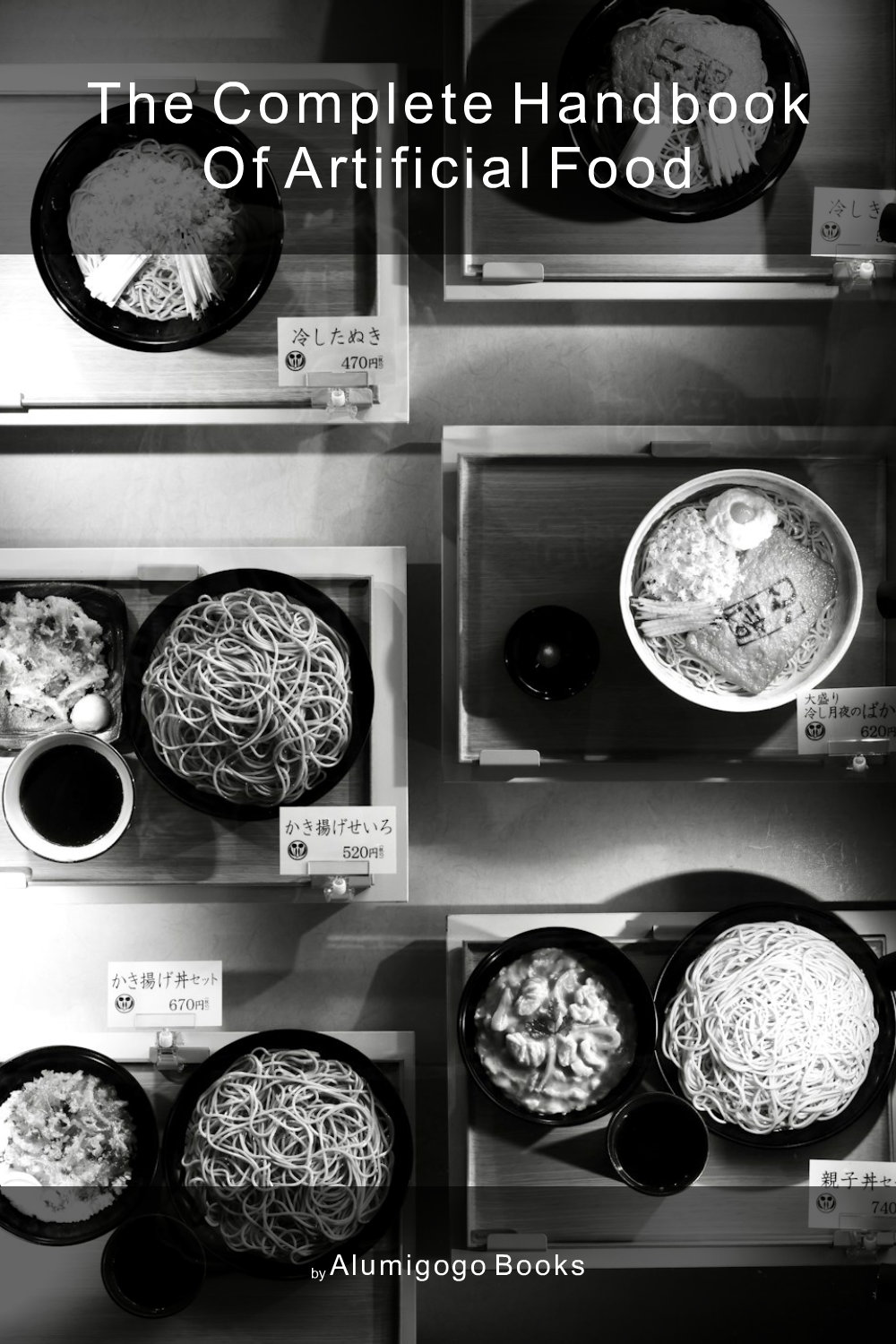
The Complete Handbook of Artificial Food
A practical reference for professionals, businesses, and serious hobbyists on selecting, using, and maintaining artificial food
★★★★★4.0 · 6 reviewsby Alumigogo Books
non-fiction
The only reference you need to select, install, and maintain artificial food that looks right and lasts. No fluff, just specifications.
🔒Secure checkout via Stripe
✓30-day money-back guarantee — not right for you? Full refund, no questions asked.
Fall Festival Sale
$9
About this book
Artificial food is not a single product but a diverse category of materials and fabrication techniques, ranging from inexpensive polyurethane props for a single photo shoot to hand-painted, museum-grade silicone replicas. This handbook is the first comprehensive, vendor-neutral resource for professionals and serious hobbyists who need to make informed decisions without relying on a salesperson's claims or trial and error.
Inside, you will find a deep dive into the materials and processes that define the industry, including casting, molding, painting, and finishing. Learn how to evaluate the crucial specifications that actually matter—not just density and hardness, but UV stability, heat deflection, and the chemical compatibility of paints. The book includes practical guidance on installation for permanent and temporary displays, extensive maintenance and troubleshooting sections, and a clear-eyed assessment of the market, including supplier positioning and concrete business opportunities.
Written in a direct, educational style, this handbook is designed to be used, not just read. It covers everything from the physics of a realistic silicone grape's translucency to the logistics of flash-baking a thermoplastic turkey. Whether you are outfitting a chain of restaurants, building a trade show booth, or creating a detailed miniature scene, the knowledge in this book will make your project simpler, sturdier, and more realistic.
Reader Reviews
Ryan Johnson
★★★★★I bought this for a themed restaurant project and it saved me from a major mistake. The chapter on choosing the right material broke down the UV stability and heat ratings in a way that actually made sense for our patio seating. I knocked off a star because I wish the troubleshooting section had more photos, but the text descriptions are clear enough. Solid reference.
Stephanie Jackson
★★★★★This is the most thorough book I own on fake food, and I own a lot of them. The specification data is excellent if you're trying to match a prop to a real environment. I'm a prop master, so I appreciated that it answers the 'why' behind the material choices, not just the 'what'. The glossary alone is worth the price. It's on my desk now, not on a shelf.
Carol Baker
★★★★★The content is informative, but I found the first chapter to be a bit dense with chemistry and manufacturing detail. As a hobbyist who makes dioramas, I wanted more information on small-scale finishing techniques, which the book mentions but doesn't focus on. It's clearly written for commercial buyers, which is fine, but I was hoping for more. It's a good reference for the basics, though.
Ronald Jones
★★★★★It's a well-organized reference book, and I like that it doesn't waste time with fluff. The chapter on business opportunities and supplier positioning is a good reality check for someone thinking about reselling. My only real reservation is that the market information is already starting to feel a little dated, which is probably inevitable for a printed book in this niche. Still, it's a useful baseline.
Stephanie Brown
★★★★★As an event planner, I need props that survive a single night of rough handling. This book's installation tips and maintenance chapter helped me understand how to secure heavier pieces and clean them without ruining the paint. I learned about a new type of lightweight material from the specifications chapter that I'm now using for a client. It's a practical manual, exactly what I needed.
Ashley Gonzalez
★★★★★Finally, a guide that treats fake food with the seriousness it deserves for professional use. The chapter on understanding the product is fantastic for grasping how different materials behave, which saved me from an expensive mistake on a museum exhibit where temperature can be a factor. I particularly appreciated the section on comparing silicone pieces versus polyurethane ones. It's comprehensive and detailed without being boring.