The Complete Handbook of Chair & Sofa Supports
A Practical Reference for Professionals, Businesses, and Serious Hobbyists on Selection, Installation, Maintenance, and Repair
★★★★★4.0 · 8 reviewsby Alumigogo Books
non-fiction
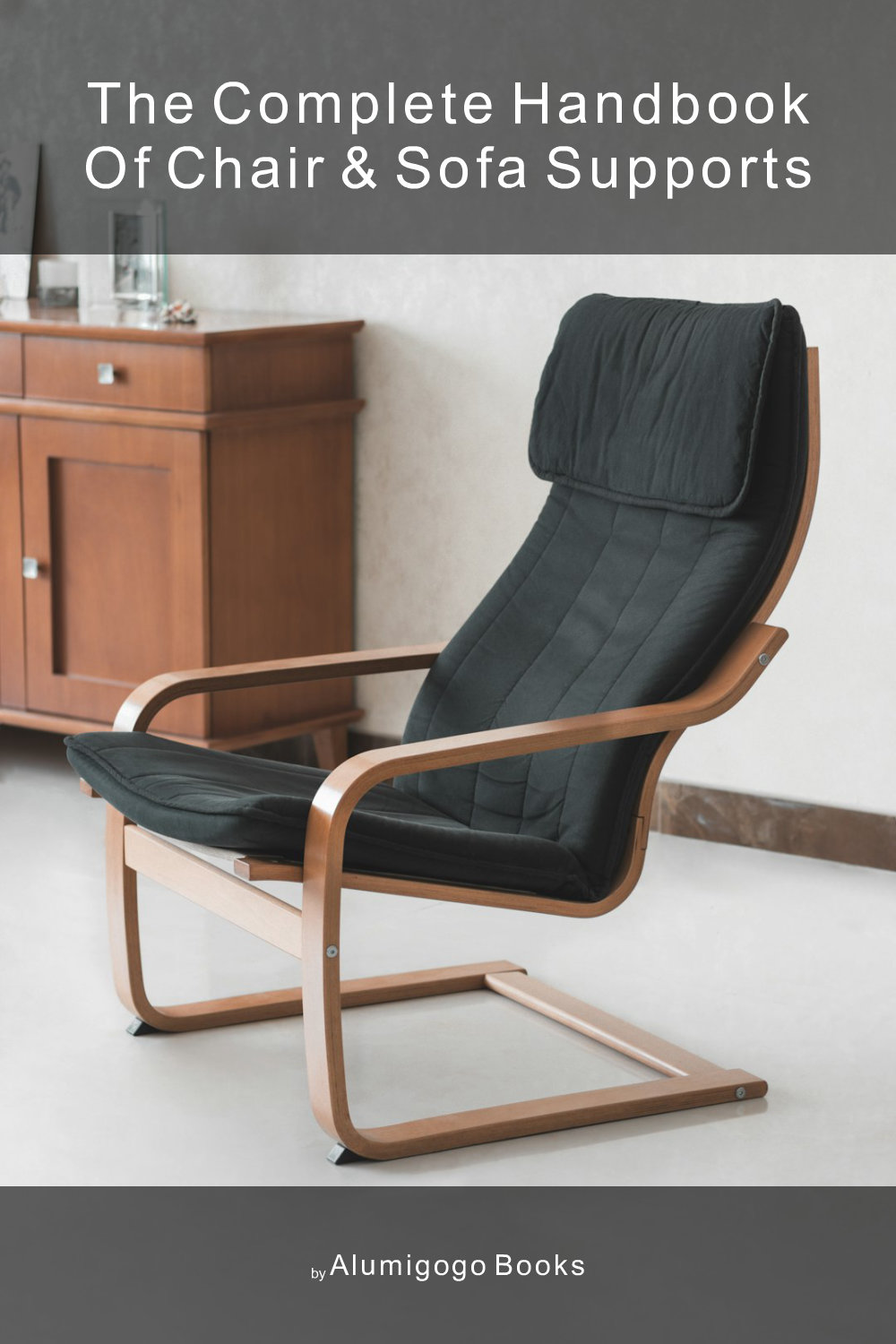
The Complete Handbook of Chair & Sofa Supports
A Practical Reference for Professionals, Businesses, and Serious Hobbyists on Selection, Installation, Maintenance, and Repair
★★★★★4.0 · 8 reviewsby Alumigogo Books
non-fiction
A complete practical reference on chair and sofa support systems: types, specs, selection, installation, maintenance, and the business around them.
🔒Secure checkout via Stripe
✓30-day money-back guarantee — not right for you? Full refund, no questions asked.
Fall Festival Sale
$9
About this book
In the furniture trade, a seat is only as good as what holds it up. The webbing, springs, and support rails beneath the cushion are responsible for comfort, durability, and safety—yet reliable, consolidated information on these components is surprisingly hard to find. This handbook is a working reference for anyone who specifies, installs, repairs, or resells chair and sofa supports the main product category that includes elastics webbing, sinuous wire springs, coil springs, mesh platforms, and their associated clips and hardware.
The book opens by grounding the reader in the mechanical principles at play—how a support system distributes static and dynamic loads, the forces at the frame's joints, and why material fatigue occurs where it does. From there, it systematically covers each support type, with the specifications that truly matter (gauge, width, elongation, spring rate, and clip compatibility). You will learn how to measure a frame correctly, choose a system based on seat depth, weight, and usage patterns, and then install and adjust it properly using the right tensioning tools. A dedicated troubleshooting chapter addresses common field failures—sagging, creaking, and clip pop-off—with concrete repair protocols.
For the professional, the final sections discuss the supplier landscape by tier, realistic business models from private labeling to servicing, and emerging trends in recycled materials and modular systems. An FAQ and a glossary of over twenty industry terms round out the volume. Written in a neutral, instructional voice, this is a book for hands-on problem solving, not armchair reading.
Reader Reviews
Lisa Nelson
★★★★★A solid, workmanlike reference. As an upholsterer, I learned some useful things about tensioning sinuous wire that I hadn't nailed down before, and the chapter on troubleshooting sagging webbing is practical. My gripe is that it's a bit dry and academic in places, and I wish it had more photographs, even just a few line drawings of the clip types. It won't get me to throw away my old notebooks, but it's earned a spot on my shelf for the business chapter alone. Decent value for the price.
Amy Garcia
★★★★★I do furniture repair on the side and picked this up because I kept getting confused by the differences between jute webbing and elastic rubber webbing. Chapter 1 finally explained why the choice matters for long-term durability, not just feels. The installation section on tensioning tools is very useful, and the glossary is a nice touch. It could have included more on the newer synthetic webbing materials, but overall, this is the most solid resource I have seen in a while.
Mary Rodriguez
★★★★★This is a very well-organized handbook. I run a small interior design studio, and the selection matrix in Chapter 3 is something I have already photocopied and put in my project binder. I also appreciated the breakdown of supplier tiers, which helped me explain to a client why a budget webbing option was a false economy. It's not a coffee table read, but it does exactly what it says. The only reason it doesn't get five stars is some of the technical spec talk gets dense, although I get that it's necessary.
Margaret Perez
★★★★★I can't speak highly enough of this book. I'm a professional furniture restorer, and I've been waiting for something like this for years. It's honest, straight to the point, and it gives you the why behind the what, which is what everyone else leaves out. The chapter on understanding the forces and load dynamics was worth the price of the book, but I also find myself using the troubleshooting chapter nearly every week. This is the new standard reference in my workshop, and I have already ordered two copies for my trainees.
Daniel Young
★★★★★Fascinating and absurdly detailed in the best way. As a hobbyist building a mid-century modern revival chair, I had no idea how many different types of support systems there were, and this book walked me through choosing the right rubber webbing for my frames. I really liked the concrete example in the first chapter that showed how a person sitting down applies a dynamic force that is many times a static weight. The maintenance tips are practical. The book is expensive, but if you are serious about furniture, it will pay for itself. Highly recommend.
Jason Lewis
★★★★★Very comprehensive and exactly what I needed to make a decision for a commercial contract. I buy furniture for a local clinic and was tired of our chairs failing within two years. The chapter on specifications and how to evaluate them helped me understand what to look for when ordering, specifically in relation to spring gauge and webbing quality. I do wish the business chapter had a few more case studies on contract furniture specifically, but it's still a great resource. I will be keeping a copy available for procurement reference.
Charles Brown
★★★★★There is a lot of good info here, and it's clear the author knows their stuff. I learned about the different ways webbing is attached to the rail, and I did find a fix for a creaking sinuous wire spring, so that was worth something. On the other hand, I felt the book dragged a bit in the first chapter, and some of the explanations are overly theoretical for someone like me who is primarily a fix-it guy. A bit more focus on the 'here is the right way to hammer the clip on' would have been better. Three stars because it's good, but not accessible for everyone.
Amanda Martin
★★★★★Finally, a reference that treats furniture support like an engineering discipline and not a mystery. I really value the chapter on why things fail, especially the explanation of material fatigue in webbing. The comparison table of coil spring versus sinuous wire was a quick reference I actually used when re-upholstering a 1960s sofa. My only small gripe is that I would have liked a bit more on integrated sensor technology in the future trends chapter, as that seems like a growing market. Other than that, a strong, reliable handbook that I will keep in my workshop library. Four stars.