The Complete Handbook of Disposable Serveware
A practical reference for buyers, operators, and resellers in food service and event operations
★★★★★3.5 · 4 reviewsby Alumigogo Books
non-fiction
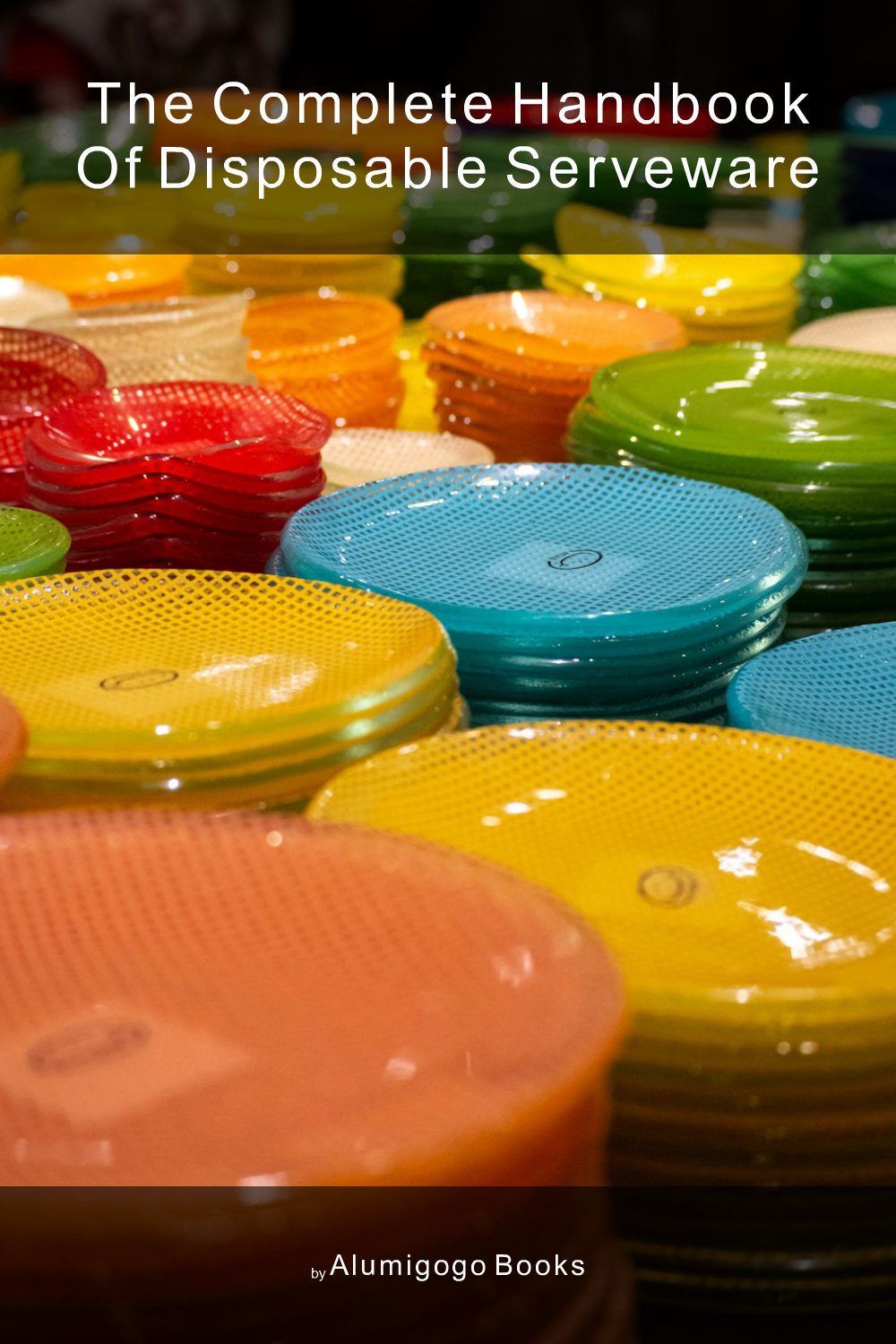
The Complete Handbook of Disposable Serveware
A practical reference for buyers, operators, and resellers in food service and event operations
★★★★★3.5 · 4 reviewsby Alumigogo Books
non-fiction
The definitive technical reference for buying, using, and profiting from disposable plates, cups, cutlery, and trays.
🔒Secure checkout via Stripe
✓30-day money-back guarantee — not right for you? Full refund, no questions asked.
Fall Festival Sale
$9
About this book
Every day, thousands of professional kitchens, caterers, and event venues rely on disposable serveware to function. Yet most buyers select these products based on habit or price alone, without understanding the material properties, temperature limits, or regulatory issues that determine whether a product performs on the day it matters. This handbook closes that gap. It explains what disposable serveware is made of—from paper and plastic to molded fiber and compostable bioplastics—and precisely how each material behaves under heat, grease, moisture, and pressure.
Reader Reviews
George Green
★★★★★It's a solid reference, but I expected more on the visual presentation side of disposable tableware. The technical chapters are thorough, though—the section on basis weight vs. actual stiffness finally explained why some 'heavy' plates flop. I'll keep it on the shelf for procurement questions, but it's not a page-turner by any means. Useful, if a bit dry, and it does feel like it was written for a facilities manager rather than someone pitching a high-end event.
Robert Hill
★★★★★I'm the purchasing manager for a mid-size catering operation, and this book just paid for itself. The chapter on material behavior under heat and grease is the clearest thing I've read on the subject. We switched our soup cups based on the temperature tolerance chart, and we stopped the leak complaints we'd had for months. The troubleshooting section also helped us realize we were storing our PLA cutlery in a hot supply closet, which was causing brittleness. Highly recommended for anyone who actually uses this stuff daily.
Brian Miller
★★★★★Decent reference, but I found the tone a bit dry and overly technical in places. The chapter on materials science was fine, though I wish it had more direct comparison tables for things like cost per unit across brands. The business opportunities chapter felt out of place for a 'handbook'—it reads like a start-up guide rather than a reference. Still, I learned a good deal about molded fiber vs. foam, and the glossary is handy. It's a book I'll reference occasionally, not read cover to cover.
Michael Davis
★★★★★It's good, but I have some reservations. The technical specs are accurate as far as I can tell, and I appreciated the practical explanations of things like 'wet strength' and 'leakproof vs. greaseproof'. However, I was hoping for more on the environmental certifications—there's a section on it, but it didn't go deep enough into the differences between the various compostability standards, which is a big deal for our clients. It's a useful tool, but I feel like it could have been a bit more comprehensive in that area.