The Complete Handbook of Fly Tying Materials
A Field Guide to Natural and Synthetic Materials for the Serious Fly Tier
★★★★★3.5 · 6 reviewsby Alumigogo Books
non-fiction
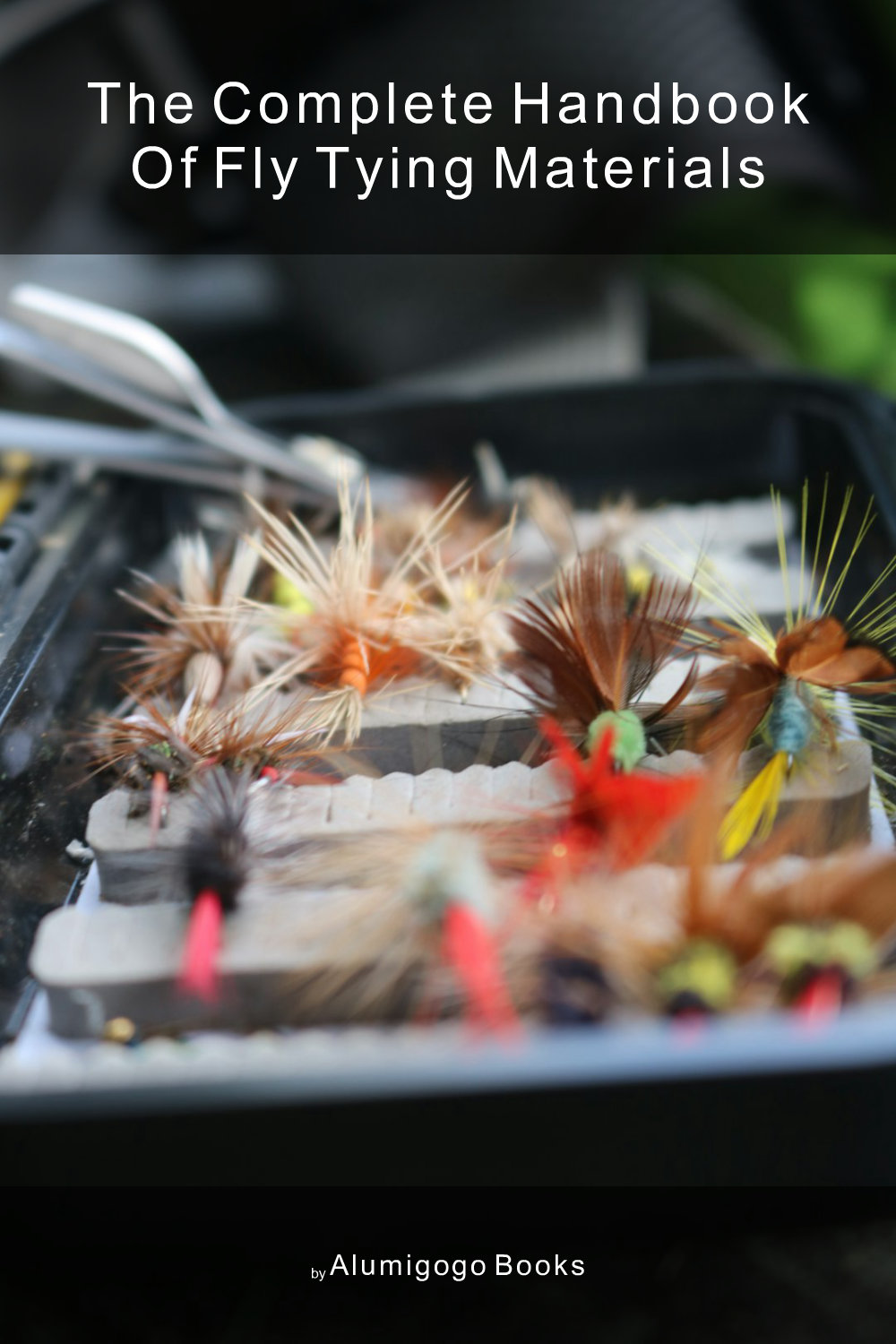
The Complete Handbook of Fly Tying Materials
A Field Guide to Natural and Synthetic Materials for the Serious Fly Tier
★★★★★3.5 · 6 reviewsby Alumigogo Books
non-fiction
The complete technical reference for fly tying materials: properties, grading, selection, and application for professionals and serious tiers.
🔒Secure checkout via Stripe
✓30-day money-back guarantee — not right for you? Full refund, no questions asked.
Fall Festival Sale
$9
About this book
Fly tying has evolved far beyond bucktail and peacock herl. Modern tiers work with a palette of hundreds of natural and synthetic materials, each with specific properties that affect how a fly casts, sinks, moves, and catches fish. This handbook is a working reference for the professional fly tier, the shop buyer, and the serious enthusiast who wants to understand what they are actually buying and why it matters.
Inside, you'll find a systematic breakdown of material categories—from feather and fur to foams, synthetic fibers, and wire—with attention to grading, durability, water absorption, and movement. The book explains how to choose materials for specific conditions, how to prepare and store them, and how to troubleshoot common failures like trapped air, color bleed, or poor floatation. For those in the trade, there is a full section on the commercial landscape: major suppliers, private-label opportunities, and how to position a materials business.
Written in plain, direct language, this is not a pattern book. It is a reference you will consult every time you sit down at the vise, whether you are tying a size 24 midge for a spring creek or a 6/0 streamer for striped bass.
Reader Reviews
Jacob Scott
★★★★★This is a comprehensive reference, and I respect the technical approach. I wish it had included more on saltwater-specific materials, but what's here is solid. The chapter on selecting materials for specific conditions helped me correct a few mistakes I was making with dyed hackle. Dry in places, but useful.
Betty Roberts
★★★★★Finally, a reference that treats fly tying materials as actual materials, not just things you buy in little bags. I've been tying commercially for a decade and learned something new about synthetic floatability and how to store certain feathers. The troubleshooting section on color bleed and trapped air alone is worth the price. I keep this on my bench now.
Donna Robinson
★★★★★I'm a hobby tier, and this was a bit more technical than I expected. It reads like a textbook in places. I did find the business chapter interesting, and the glossary is actually useful. Honestly, if you tie for fun and only buy pre-packaged material packs, you might not need this much detail—but for serious hobbyists, it's a solid resource.
Patricia Taylor
★★★★★The production and business overview was useful, and the material property tables in Part 2 gave me a straightforward way to compare synthetic body materials. I docked a star because I felt the chapter on installation and usage was lighter than I expected—it focuses mostly on prep, less on actual on-vise techniques. Still, a strong reference.
Mary Wilson
★★★★★I found the section on natural material grading extremely useful—I was always buying whatever was in the bin, but now I understand what to look for in neck quality and translucent web. The storage recommendations made me immediately reorganize my tying cabinet. Well-written and practical, even if a few sections are best skimmed. Minor issue: I wish the binding lay flatter on the bench.
Christopher Young
★★★★★It delivers exactly what the subtitle promises: a field guide. The chapter on troubleshooting was my favorite—I've struggled with matted hare's mask for years and the solution here was simple. My only reservation is that I found the future trends section speculative, but that's a small part of the book. For the working tier, this is a good text.