The Complete Handbook of Gongs
A practical reference for buyers, sellers, and technicians covering types, specifications, setup, maintenance, and business opportunities
★★★★★3.9 · 7 reviewsby Alumigogo Books
non-fiction
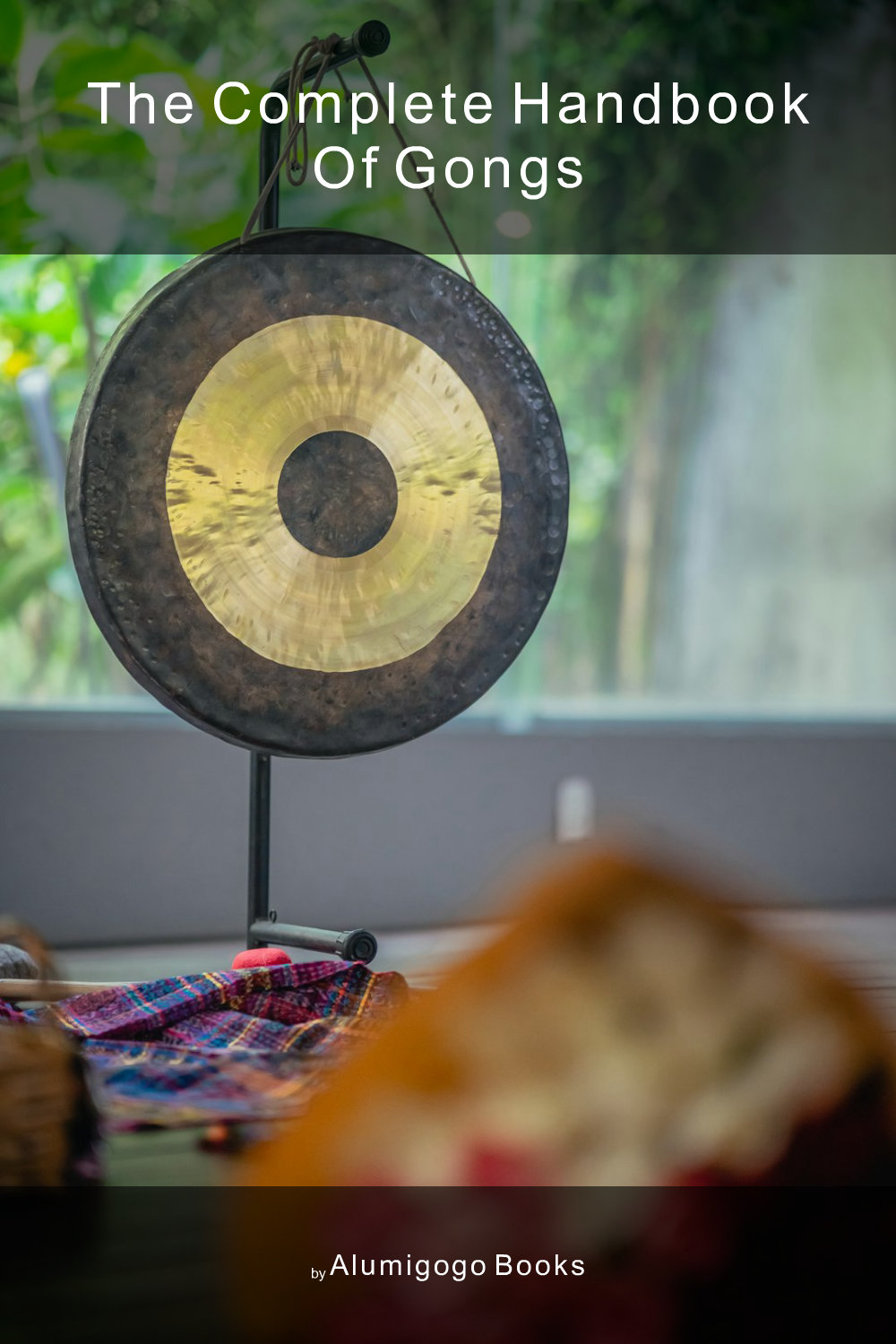
The Complete Handbook of Gongs
A practical reference for buyers, sellers, and technicians covering types, specifications, setup, maintenance, and business opportunities
★★★★★3.9 · 7 reviewsby Alumigogo Books
non-fiction
The complete field guide to gongs: types, specs, setup, repair, and business — grounded in practical, verifiable knowledge.
🔒Secure checkout via Stripe
✓30-day money-back guarantee — not right for you? Full refund, no questions asked.
Fall Festival Sale
$9
About this book
A gong is not a simple metal disc. Its voice is determined by the alloy, the hammering technique, the diameter, the curvature, and the suspension system — and most of that information is scattered across manufacturer brochures and forum arguments. This handbook consolidates it into a single, practical reference written for people who earn a living or spend serious money on percussion instruments.
Inside, you will find a systematic framework for evaluating gongs by measurable specifications — diameter, weight, alloy, wall thickness, profile depth, and hammer density — rather than vague adjectives like 'rich' or 'deep.' The book covers installation methods for stands, ceilings, and theater rigging; daily usage protocol for performance and sound therapy; and a full maintenance chapter with diagnostic flowcharts for cracks, buzzes, and inconsistent pitch. An entire chapter is dedicated to the business of gongs: wholesale sourcing, rental inventory, repair pricing, and consulting opportunities.
Written in neutral, practical language, the handbook avoids hype and generic advice. Whether you are a sound therapist building a studio setup, a rental house managing a fleet of instruments, or a retailer looking to stock the right sizes and brands, this is the reference you will keep on the workbench, not on the shelf.
Reader Reviews
Christopher Adams
★★★★★I've been restringing and repairing gongs for about eight years and mostly figured this stuff out the hard way. The maintenance chapter alone is worth the price — the crack diagnosis flow is exactly what I needed to explain to clients why a cheap gong can't be saved but a good one can. Only gripe is I wish the photography showed closer detail on the hammering patterns, but the text descriptions are accurate enough.
Sandra Rivera
★★★★★Solid information, but it reads more like a maintenance manual than a handbook I'd choose to read cover to cover. The chapter on types is genuinely useful for someone confused about the difference between a tam-tam and a tuned gong, and I'd recommend it for that. I just expected a bit more historical context and less technical focus on bolt torque values, which felt like overkill for me as a performing percussionist.
Deborah Sanchez
★★★★★This is the book I've been wishing existed for the past ten years. As a sound therapist, I've relied on vendor descriptions that contradict each other constantly. The chapter on choosing the right gong made me re-evaluate my entire studio setup — I realized I'd been using the wrong mallet material for my room's acoustics. The business chapter is also genuinely practical, not the usual 'start a website and hope' fluff. I've recommended it to every colleague in my training group.
Patricia Brown
★★★★★Very thorough on the engineering side of things. The specification comparison table in chapter two helped me finally understand why two 22-inch gongs can cost five times differently — it's the hammering density, not just the brand name. I've docked one star only because I found the troubleshooting chapter a little thin on how to handle gongs that ring with an unwanted overtone after years of heavy use, but overall this is now my go-to recommendation for students.
Ashley Carter
★★★★★I run a small rental company and bought this hoping for practical advice on inventory management and repair pricing. The setup and rigging chapter is excellent — it prevented at least two ceiling mounts that would have been unsafe. But the business chapter felt a bit generic on rental pricing models; I had to do my own research on what equipment rental rates to actually charge. Still, a useful reference, and the glossary is handy for my less experienced staff.
Paul Taylor
★★★★★Finally — a reference work that treats gongs as precision instruments, not souvenirs. I'm a collector and a builder, and the explanation of how alloy composition and wall thickness interact with the hammering pattern is the clearest I've ever read. The comparison of sand-cast versus rolled and hammered gongs alone is worth the purchase. The future trends chapter is also genuinely informative — I've now had conversations with my supplier about alternative alloys because of it.
Ryan Rivera
★★★★★It's a decent reference but I can't say it changed my setup much. I've been playing for twenty years and the first three chapters confirmed what I already knew. The maintenance section is where this book earns its keep — the torque spec table for suspension bolts and the buzzing diagnosis section solved an issue I'd been chasing for months on my stage gong. If you're a beginner or a technician, you'll love it; for an established professional it's more of a reference backup.