The Complete Handbook of Guitar Straps
A practical reference for selecting, fitting, maintaining, and sourcing guitar straps for professionals, retailers, and serious players
★★★★★4.1 · 7 reviewsby Alumigogo Books
non-fiction
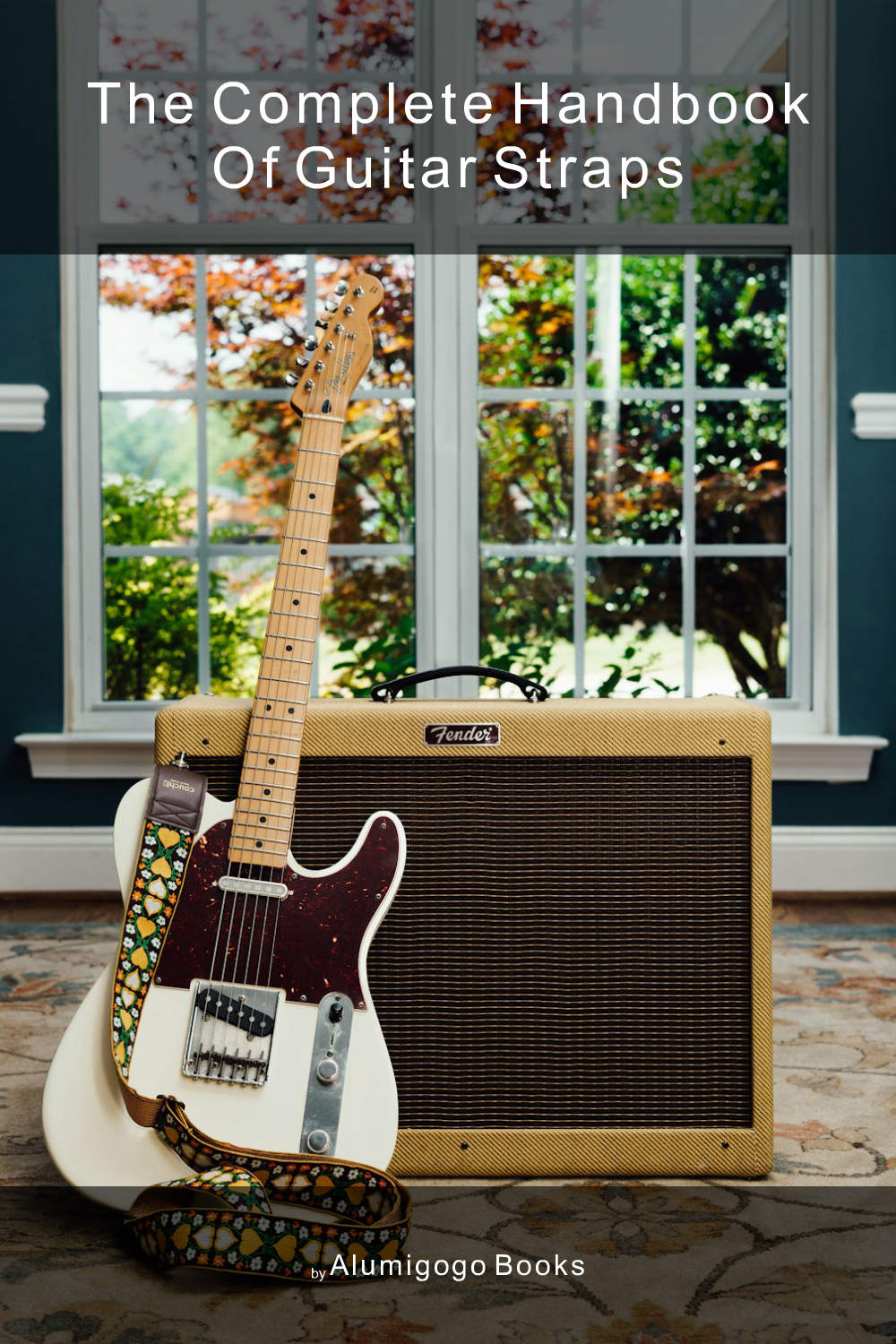
The Complete Handbook of Guitar Straps
A practical reference for selecting, fitting, maintaining, and sourcing guitar straps for professionals, retailers, and serious players
★★★★★4.1 · 7 reviewsby Alumigogo Books
non-fiction
From webbing density to button torque specs: the neutral, hands-on reference for buying, fitting, maintaining, and selling guitar straps.
🔒Secure checkout via Stripe
✓30-day money-back guarantee — not right for you? Full refund, no questions asked.
Fall Festival Sale
$9
About this book
Most guitarists choose a strap by color and brand logo. That approach fails the moment you stand up with a heavy semi-hollow body or play three-hour bar gigs in the summer. This handbook treats the guitar strap as what it actually is: a load-bearing safety device and an ergonomic tool. It breaks down the anatomy of a strap, explains the material science of woven webbing, treated leather, and synthetic blends, and gives you the actual numbers for breaking strength, stretch, and hardware fatigue.
The middle of the book covers installation and maintenance with a level of specificity you will not find in a retailer's buying guide. You will learn what screw gauge and length to use for a Les Paul body versus a thin-bodied Strat copy, why a polypropylene webbing strap has a different lifetime in Phoenix versus Seattle, and how to fix the most common failures: pulled buttons, stretched holes, and corroded buckles. The final chapters turn to the money side, covering how straps are priced at wholesale, how to evaluate a supplier for private-label work, and what retail and online businesses actually need to do to profit from this accessory category.
The tone is consistent throughout: neutral, concrete, and reference-oriented. If you are a working player, a store manager, or a repair tech who has to answer strap questions every week, this book is the manual you have been missing.
Reader Reviews
Stephanie Nelson
★★★★★I repair guitars for a living and I still found the chapter on installation and troubleshooting genuinely useful. The specific screw gauge and length recommendations for different body woods is the kind of thing you normally have to learn by pulling a button out of a customer's 1970s acoustic. My only complaint is that the business chapter felt a bit thin on actual supplier names, but I understand why they kept it generic. Solid desk reference.
Cynthia Wilson
★★★★★This is the first book I've found that treats straps as an engineered component rather than a fashion accessory. The stretch rate comparisons between polypropylene and different leather thicknesses alone saved me from a bad purchase. Also, the chapter on installation is worth the price of admission - I've been playing for 25 years and never knew my strap buttons were installed with the wrong torque. Every gigging musician should have this on their shelf.
Susan Nelson
★★★★★It's thorough, no question, but I felt it was heavier on the mechanical theory and lighter on the practical 'which one do I actually buy for a standard Les Paul' side than I expected. The specification tables are great if you're an engineer or a retailer, but as a hobbyist who plays on weekends, I skipped a few passages. The maintenance chapter is good, and the troubleshooting section covered a button issue I had. Just be aware that this is a reference manual, not a casual read.
Laura Nelson
★★★★★I manage the accessories section of a mid-size music store and I've already used the wholesale pricing and positioning breakdown in the business chapter to reorganize our entire strap wall. The material comparison tables help me answer customer questions with actual facts. It would get five stars if the glossary had a few more terms around leather treatments, but for what it is - a straight-talking reference - it does exactly what it says.
Daniel Sanchez
★★★★★Finally, someone wrote the book that the forums have been trying to be for years. The installation chapter alone - with the actual torque values and the explanation of why a thin-bodied bolt-on needs a different screw length than a set-neck - is something I wish I had twenty years ago. The section on evaluating used straps for dry rot and hidden damage is brilliant. This is going to stay in my gear bag with my spare cables.
Brian Mitchell
★★★★★A lot of the material makes sense but it took some effort to get through the heavy spec stuff. The authors clearly know what they're talking about, but I was hoping for a shorter, more direct 'if you play a semi-hollow and do two-hour sets, this is the strap' kind of answer. It's there if you look, but you have to wade through a lot of thread counts and webbing densities. Solid information, just not the quick reference I pictured.
Carol Rodriguez
★★★★★As someone who builds guitars as a side business, the chapter on strap button installation and the hardware standards section alone made this an essential purchase. I also appreciated the honest breakdown of the business opportunities - the margin calculations for private-labeling were realistic and not the usual 'you'll get rich' hype. The maintenance chapter has already helped me advise a customer on repairing a split leather strap. This is the reference I'll be recommending in my workshop.