The Complete Handbook of Key Blanks
The Professional's Reference for Blank Keys: Selection, Specification, and Sourcing
★★★★★3.8 · 6 reviewsby Alumigogo Books
non-fiction
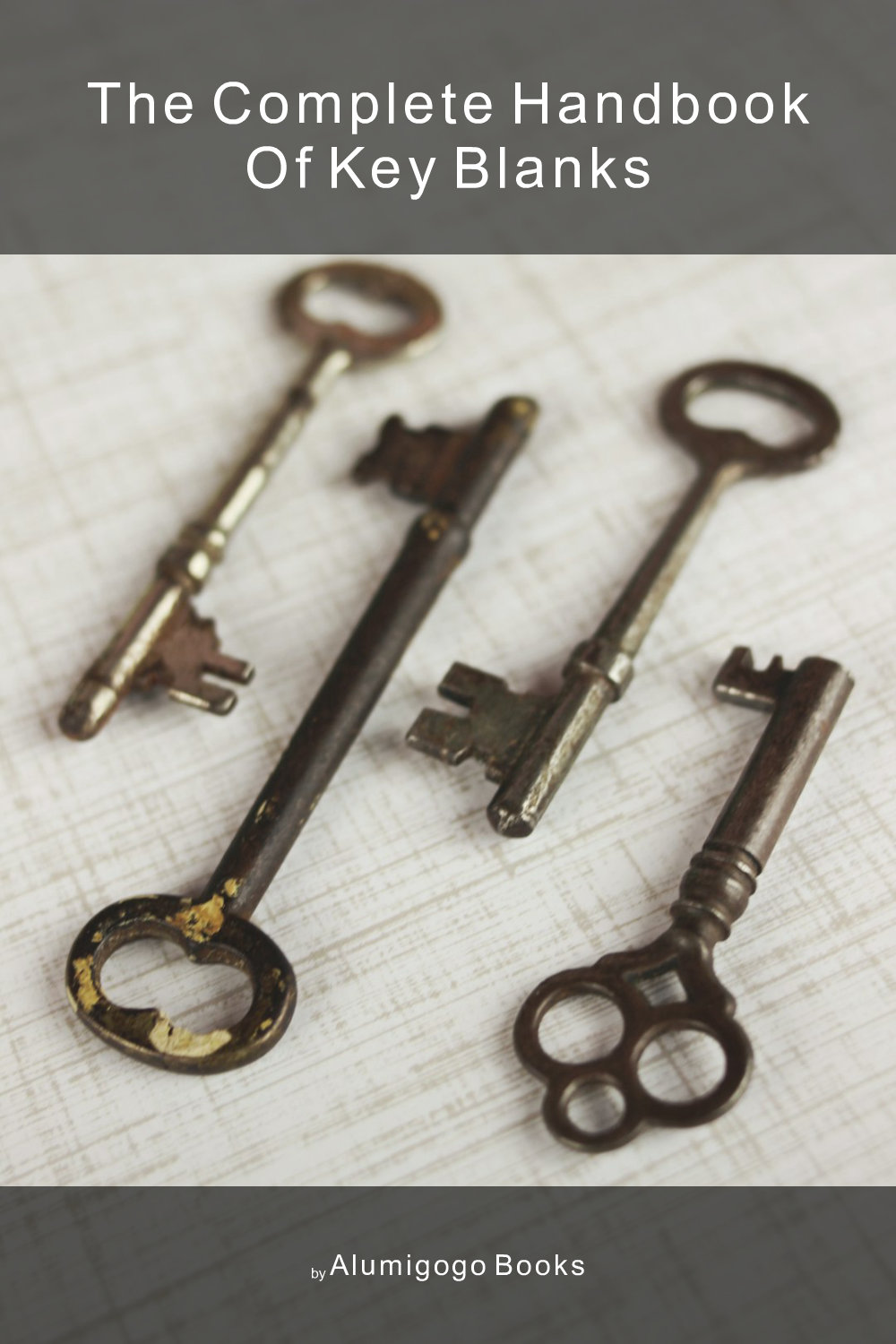
The Complete Handbook of Key Blanks
The Professional's Reference for Blank Keys: Selection, Specification, and Sourcing
★★★★★3.8 · 6 reviewsby Alumigogo Books
non-fiction
The definitive, practical guide to key blanks: metallurgy, keyways, sourcing, and the business of keys.
🔒Secure checkout via Stripe
✓30-day money-back guarantee — not right for you? Full refund, no questions asked.
Fall Festival Sale
$9
About this book
This handbook is for professionals who work with keys every day but have never had a single, reliable reference for the raw materials of their trade: the blanks themselves. It moves beyond the simple dichotomy of 'brass vs. nickel silver' to explain what those material choices mean for wear, corrosion resistance, and machineability. With detailed chapters on keyway systems, bow design, and the meaning of various stamps and markings, you'll learn to identify a blank's manufacturer and series at a glance, reducing costly mis-orders and guesswork.
The book dives deep into the specifications that matter: blade thickness, shoulder position, milling depth, and how these measurements interact with the locks they serve. It offers a practical methodology for selecting the correct blank, whether you're cutting a copy of a worn-out house key, sourcing equivalents for a foreign-made cylinder, or building a comprehensive inventory for a new locksmith business. We cover the subtleties of aftermarket vs. OEM blanks, the realities of intellectual property in keyways, and what high-security restricted keyways actually offer versus what is marketing.
Beyond the bench, the book provides a clear-eyed look at the business of key blanks. It discusses inventory management strategies, the economics of wholesale buying, direct-to-consumer retailing, and how to assess opportunities in specialized niches like automotive and restricted key systems. The final chapters look ahead at industry trends, including smart locks, new materials like titanium, and the shifting role of physical keys. This is the complete, practical handbook for anyone serious about making a living or mastering a craft that hinges on these small but critical pieces of metal.
Reader Reviews
Carol Anderson
★★★★★I've been cutting keys for twenty years and I still picked up a few tricks from this. The chapter on understanding how the milling depth actually interacts with the pin stack was a good refresher, and I finally feel like I understand the real difference between some of the cheap steel blanks from overseas and the name-brand stuff. It's a bit dry in places, but for a reference book, it does what it says. The section on cross-referencing is going to save me time.
Ronald Martinez
★★★★★It's a solid reference, don't get me wrong, and I'll keep it in the shop. But I was hoping for a bit more on the actual business of key duplication, like pricing models. The chapter on business opportunities felt a little too broad. I would have liked more concrete examples of, say, what a profitable margin looks like on a standard brass house blank after you account for the cost of the machine wear and labor. It's a good manual, just not the final word on everything.
Gary Harris
★★★★★Finally, a book that treats key blanks with the respect they deserve. This isn't fluff. It's packed with the exact specifications you need to know, like the difference between a Schlage C keyway and a Kwikset KW1, and why you can't just jam one into the other. The chapter on restricted keyways and patents is worth the price alone. It's already earned its spot on my bench, and I've used it to settle a few arguments with customers who are convinced we have a 'universal' key. We don't, and now I can show them why.
Deborah Allen
★★★★★I'm a facilities manager, not a locksmith, but I'm responsible for a few hundred locks across our buildings, and we have our own key machine. This book gave me the vocabulary to communicate effectively with our locksmith supplier and to understand why we can't just buy the cheapest bulk blanks. I found the sections on identifying blanks and understanding codes very helpful. My only minor gripe is that I wish it had a few more photographs, but the technical drawings are clear enough. A practical, worthwhile investment.
Melissa Flores
★★★★★Bought this to learn more for a new side business I'm starting. I've been cutting for friends, but I wanted to be more professional. This book is like a total course in one place. The overview of the market and the whole chapter on brands was a huge help for me to understand who the major players are and what the reputation is of different suppliers. It made me feel a lot more confident about navigating wholesale catalogs. It's a bit heavier on the hardware side than I expected, and I did skim some parts, but I feel it was a smart buy.
David Anderson
★★★★★The technical accuracy seems fine, and I appreciate the attempt at a comprehensive reference. But the tone can get a little too academic, like it's written for an engineer designing a lock, not a person running a small shop. I found myself rereading sentences on blade geometry that could have been simplified. Also, the glossary is good, but I think the troubleshooting section could have been longer. It's a decent book, but I feel like 'The Standard Reference' might be a bit of an overstatement.