The Complete Handbook of Marine Audio & Video Receivers
Selection, installation, maintenance, and business strategy for marine-grade audio and video systems on saltwater and freshwater vessels
★★★★★4.6 · 5 reviewsby Alumigogo Books
non-fiction
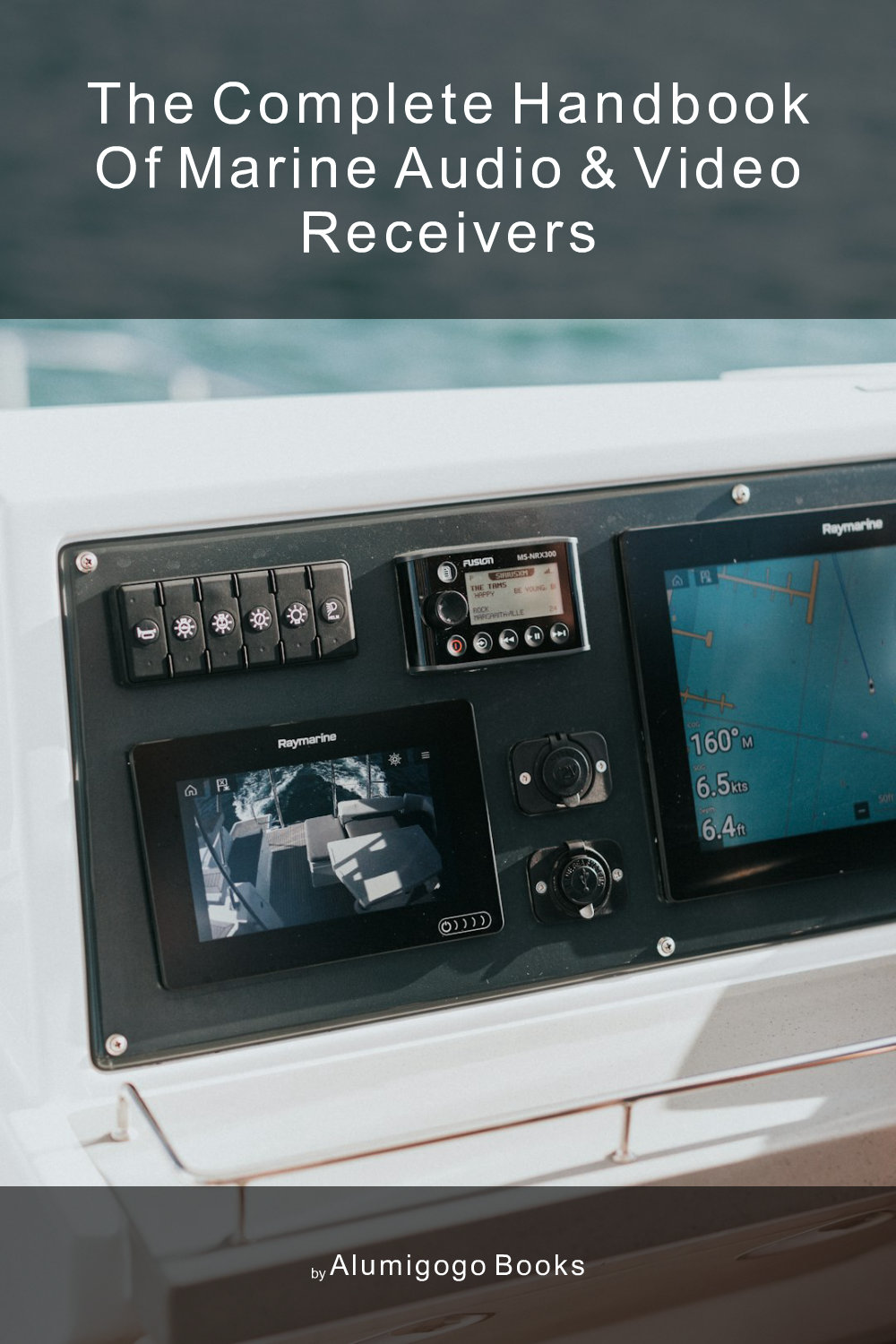
The Complete Handbook of Marine Audio & Video Receivers
Selection, installation, maintenance, and business strategy for marine-grade audio and video systems on saltwater and freshwater vessels
★★★★★4.6 · 5 reviewsby Alumigogo Books
non-fiction
The practical reference for choosing, installing, and fixing marine audio and video receivers that actually survive saltwater.
🔒Secure checkout via Stripe
✓30-day money-back guarantee — not right for you? Full refund, no questions asked.
Fall Festival Sale
$9
About this book
Marine audio and video receivers are not just car stereos with a waterproof sticker. They face salt-laden air, voltage swings from engine cranking, direct sun exposure, and RF interference from onboard systems. This handbook strips away the marketing and explains what makes a receiver genuinely marine-grade, how to match a unit to a specific vessel and use case, and how to install it so it stays reliable for years.
The book walks through real-world decision making, from defining requirements (e.g., zone count, source compatibility, screen visibility in direct sunlight) to choosing between entry-level, mid-range, and premium units from major manufacturers. It covers installation techniques that prevent water intrusion and corrosion, troubleshooting charts for common failures like intermittent power, and a maintenance schedule designed for saltwater, freshwater, and charter-use environments.
For professionals, there is a dedicated chapter on business opportunities: service contracts, wholesale reselling, private-label branding, rental fleets, and consulting for boat builders. The final sections cover emerging trends like NMEA 2000 integration, wireless audio, and networked video, plus a curated list of standards bodies, certification programs, and publications for ongoing learning. This is the book to keep in the shop or on the boat, not on a coffee table.
Reader Reviews
Timothy Thompson
★★★★★I found the chapter on installation particularly useful, especially the part about routing cables to avoid noise from the engine and the bilge pump. I like that it uses actual vessel types as examples, rather than just talking in abstract spec terms. It's not a replacement for the manufacturer's manual, but it's a good sanity check when you're planning a system. My only gripe is that the section on NMEA 2000 could have been longer, but that's probably me being picky. Overall, a good reference.
Thomas Rodriguez
★★★★★Compared to the boat forums I usually rely on, this book is much more grounded. It's nice to have the failure mode probabilities spelled out (corrosion at the connectors, etc.) without the usual speculation and anecdotal fixes. The return on investment analysis in the business chapter is a bit optimistic for smaller operators, but the rest of the content is worth the price. It sits on my desk now, and I've already referenced it twice for jobs.
Andrew Nguyen
★★★★★This is the handbook I wish I had when I started doing my own installs. It doesn't tell you what to buy; it teaches you how to think about the environment and the electrical system before you buy. The comparison between how a receiver behaves on 12V during engine start versus on a charger is spot on. I've already re-wired my helm station based on the chapter on grounding. It's a solid reference with no fluff.
George Baker
★★★★★As someone who runs a small marina service shop, I'd been looking for a book that covers the business side as much as the electronics side. The chapter on building a service contract and the margins on private-label units was worth the cost alone. The book's a keeper. The troubleshooting section in Chapter 5 has already summarized three potential service calls we've had this month. Very practical.
Ronald Martin
★★★★★I've bought a few guide books on marine electronics before, and this one is the first that respects the reader's time and intelligence. No hype, no 'game-changing' nonsense, just clear explanations of why a receiver rated for freshwater isn't a good idea in my charter operation. The specific examples of power draw on batteries and the voltage drop scenarios were very helpful for planning my dual-battery setup. I'll be ordering the hard copy for my boat.