The Complete Handbook of Saris & Lehengas
A professional's field guide to sourcing, evaluating, wearing, and maintaining India's two most iconic garment forms
★★★★★4.3 · 6 reviewsby Alumigogo Books
non-fiction
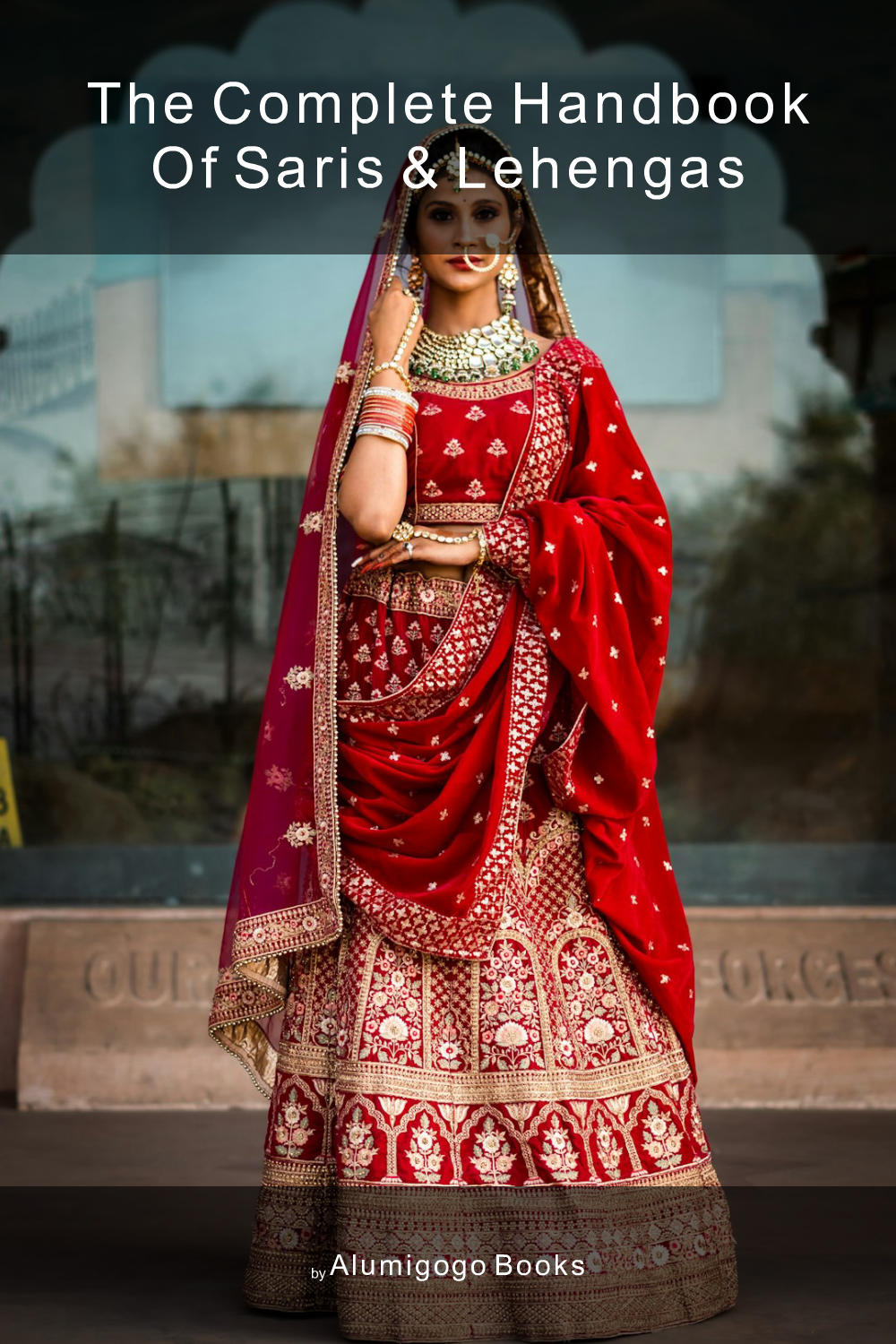
The Complete Handbook of Saris & Lehengas
A professional's field guide to sourcing, evaluating, wearing, and maintaining India's two most iconic garment forms
★★★★★4.3 · 6 reviewsby Alumigogo Books
non-fiction
The working professional's reference for evaluating, wearing, maintaining, and selling saris and lehengas—without the marketing gloss.
🔒Secure checkout via Stripe
✓30-day money-back guarantee — not right for you? Full refund, no questions asked.
Fall Festival Sale
$9
About this book
Saris and lehengas are not single products but entire categories with massive variation in fiber, weave, weight, construction, and regional identity. A Banarasi silk sari and a cotton Chanderi sari behave differently, cost differently, and require different care. The same is true for lehengas: a heavily embroidered bridal piece and a simple cotton festive lehenga share a name but nothing else in terms of maintenance or longevity. This handbook strips away the romance and gives you the specifications, the failure modes, and the economics.
Covering nine structured chapters, the book walks you through fiber identification, weave and weight specifications, drape and fall mechanics, fit adjustment for different body types, proper folding and hanging methods, stain and pest management, and restoration techniques for worn zari or loose embroidery. It also provides a clear-eyed look at the supply side: how wholesale markets in Surat, Chennai, and Varanasi operate, what margin structures are common, and how rental and resale models are evolving. The final chapters cover emerging trends in sustainable fibers and digital retail, plus a practical glossary and FAQ for daily use.
Written for buyers, sellers, tailors, stylists, and enthusiasts, this handbook avoids fashion-magazine fluff and provides the kind of concrete, field-tested guidance that professionals need. Whether you are buying a single sari for a wedding or stocking a rental wardrobe, the checklists, decision frameworks, and maintenance schedules in this book will save you money and prevent costly mistakes.
Reader Reviews
Robert Gonzalez
★★★★★I run a small bridal rental business and I've been flying blind for years, relying on whatever the suppliers told me. This handbook finally gave me a vocabulary and a testing method. The chapter on evaluating zari content and embroidery coverage alone paid for the book—I found two pieces in my current stock that I'd been mislabeling and undercharging for. The maintenance chapter has already saved me from ruining a rented lehenga with the wrong stain treatment. It's the first reference I've seen that treats this as a profession, not a hobby.
Mary Moore
★★★★★Solid information overall, and I appreciated that it never talks down to the reader. The first chapter's explanation of how drape is actually a function of weave density and weight was genuinely helpful. My only gripe is that the chapter on types felt a little heavy on the South Indian saris and thinner on the Maharashtrian and Gujarati traditions—I would have liked the same depth there. But as a general reference for a costume shop in the US, it's far more useful than anything else I've found.
Amanda Ramirez
★★★★★A very practical, no-nonsense book. I bought it because I'm building a personal collection of silk saris and I kept ruining pieces with bad storage and cleaning. The troubleshooting chapter is exactly what I needed—the concrete advice on managing humidity and insects uses plain terms and specific steps, not vague 'store carefully' instructions. The only reason I'm not giving it five stars is that some of the business chapters, like the one on supplier hubs, are probably more relevant to someone in India or a major importing market, but as a US buyer, I still found the general principles transferable.
Sarah Williams
★★★★★I'm a textile design student and this is the book I wish I'd had at the start of my degree. It explains zari, jacquard, and weave structures clearly, with actual numbers and weights that matter. The back-cover description was accurate—it really is a working reference, not a coffee-table book. The chapter on future trends is particularly well done; it's honest about sustainability being a mixed picture rather than a simple win. I've already referenced it in two of my papers. This is going to stay within arm's reach.
Amy Robinson
★★★★★Finally, a reference that explains the difference between a ₹2,000 sari and a ₹20,000 sari without being sniffy or promotional. The chapter on what to look for at the point of sale is brilliant—it has a simple checklist that I've started using when I source for my small boutique. The explanation of how to test for synthetic fiber blends at the shop was something none of my suppliers ever mentioned. It's a bit dense in places and assumes you're comfortable with technical terms, but the glossary sorts that out. This is the real thing.
Paul Wilson
★★★★★It's a competent reference, and I can see why it's useful for people starting a business, but I was hoping for more on the actual wearing and draping techniques, which felt like it was covered in just one chapter. Also, as someone who works mostly in event styling, I found the book's default assumptions about having access to local laundries or specialist tailors a bit too optimistic—it doesn't fully account for non-Indian contexts. That said, the glossary and the QA section answered a lot of questions I'd been carrying around. A good reference, just not the comprehensive wearer's guide I expected.