The Complete Handbook of Tapenade
A professional's field guide to selecting, using, and profiting from tapenade
★★★★★4.0 · 5 reviewsby Alumigogo Books
non-fiction
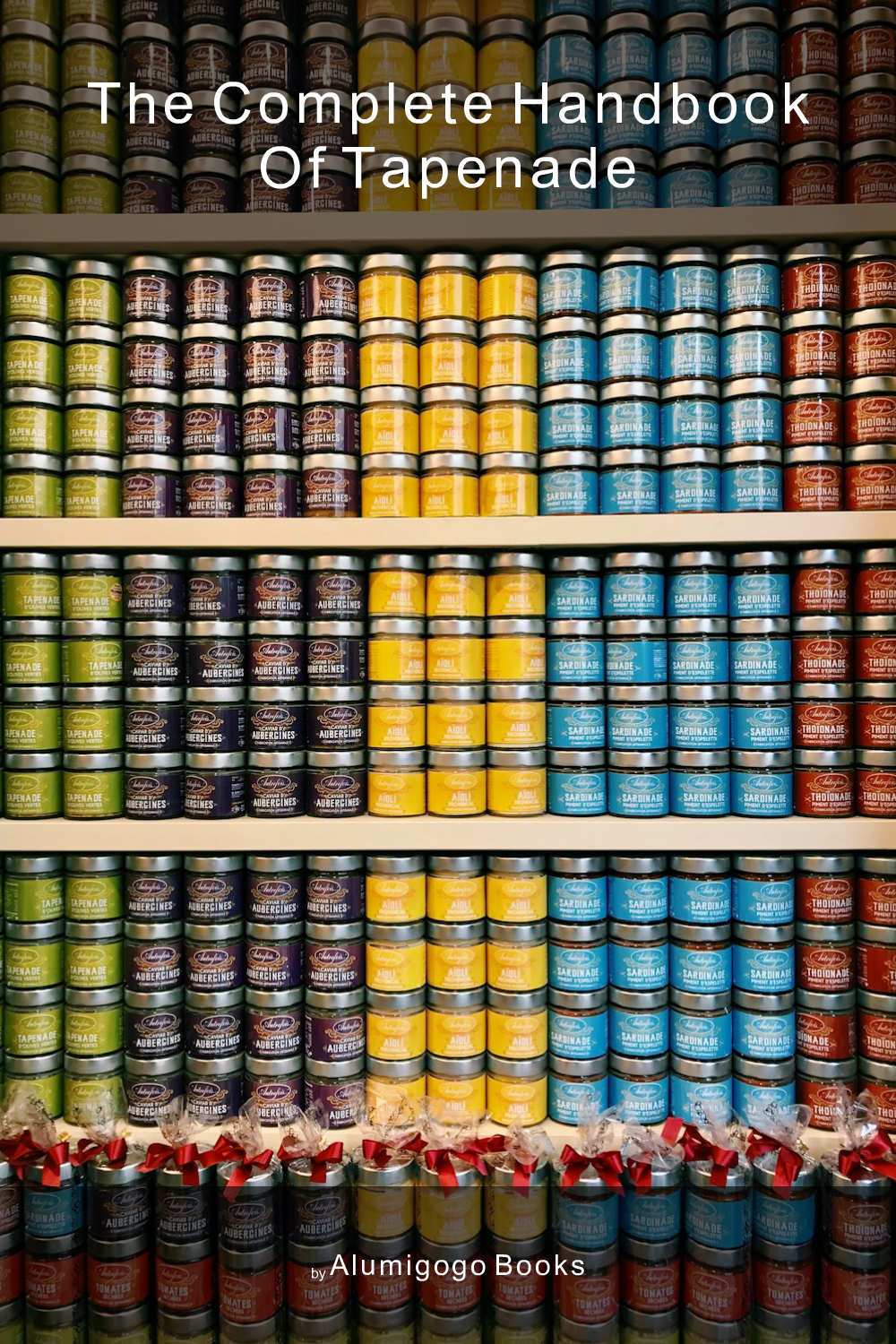
The Complete Handbook of Tapenade
A professional's field guide to selecting, using, and profiting from tapenade
★★★★★4.0 · 5 reviewsby Alumigogo Books
non-fiction
The only handbook that covers tapenade from spec sheet to menu to profit margin. Essential reading for professionals.
🔒Secure checkout via Stripe
✓30-day money-back guarantee — not right for you? Full refund, no questions asked.
Fall Festival Sale
$9
About this book
Tapenade looks simple: olives, capers, anchovies, olive oil. But in commercial reality, it is a product defined by enormous variability in raw material quality, grind size, salt content, acidity, preservatives, and legal naming. The difference between a 3-dollar jar and a 12-dollar jar is not marketing; it is measurable in olive variety, pit content, capers from specific regions, and the ratio of olive paste to filler. This handbook teaches you how to tell the difference, on sight and on the palate, and how to put that knowledge to work.
The book is organized as a working manual, not an encyclopedia. You will learn how to read a specification sheet, what pH and water activity (aw) numbers mean for shelf life, why some tapenades are packed under nitrogen and others are not, and exactly how to pair a coarse-ground, high-acid tapenade with a fine-ground, low-acid one. There are practical chapters on storage, troubleshooting (crusting, weeping, rancid smell, and glass breakage), and building a business around tapenade, including private-labeling and consulting.
For the professional, this is the reference you keep behind the counter. It does not tell you what to love; it tells you what to look for and what to charge. It is written for a reader who wants to be the most knowledgeable person in the room, not the most enthusiastic.
Reader Reviews
Angela Rodriguez
★★★★★It's genuinely useful, and I recommend it to my staff. The chapter on choosing a tapenade for different uses was very practical. But I found the brand and supplier section a bit too generic, and I was hoping for more on specific importers. Still, it's better than any other single source I've used, so a solid three stars.
Brian Thompson
★★★★★As a retail store owner, I've been buying tapenade for years based on gut feel and whatever the distributor said. This book gave me a vocabulary and a checklist for comparing products, and the troubleshooting section saved a batch I thought was dead. The chapter on business opportunities felt a little high-level, but it did make me think about private label seriously. Four stars.
Gary Lee
★★★★★Good book. It is very thorough and the chapter on specifications is exactly what I needed to have real conversations with suppliers. I found the writing style a bit dry, but you're not buying a reference book for the anecdotes. It's going to stay on my desk at work. Knocking off one star because the future trends chapter felt speculative.
Jessica Martinez
★★★★★This is the book I wish I had when I started my catering business. The section on storage and shelf life alone paid for the book, and the explanations of water activity and pH are finally clear, not just thrown around. I gave each of my line cooks the troubleshooting chart. It's the only reference on my shelf that is actually about the product and not about a brand.
Timothy Green
★★★★★A thorough, practical reference. It is not a recipe book, which is exactly what I wanted. I appreciated the concrete data on jar sizes, packaging, and the guide to matching tapenade to a menu. The glossary seemed a little over the top for a professional, but honestly, it caught my server on a point of knowledge. Only four stars because the business opportunities chapter covered room for growth, not a playbook.