The Unprofessional Guide to alopecia, neurologic defects, and endocrinopathy syndrome
What You Need to Know — For Informational Purposes Only. A Plain-Language Guide for Patients and Caregivers
★★★★★3.7 · 6 reviewsby Alumigogo Books
non-fiction
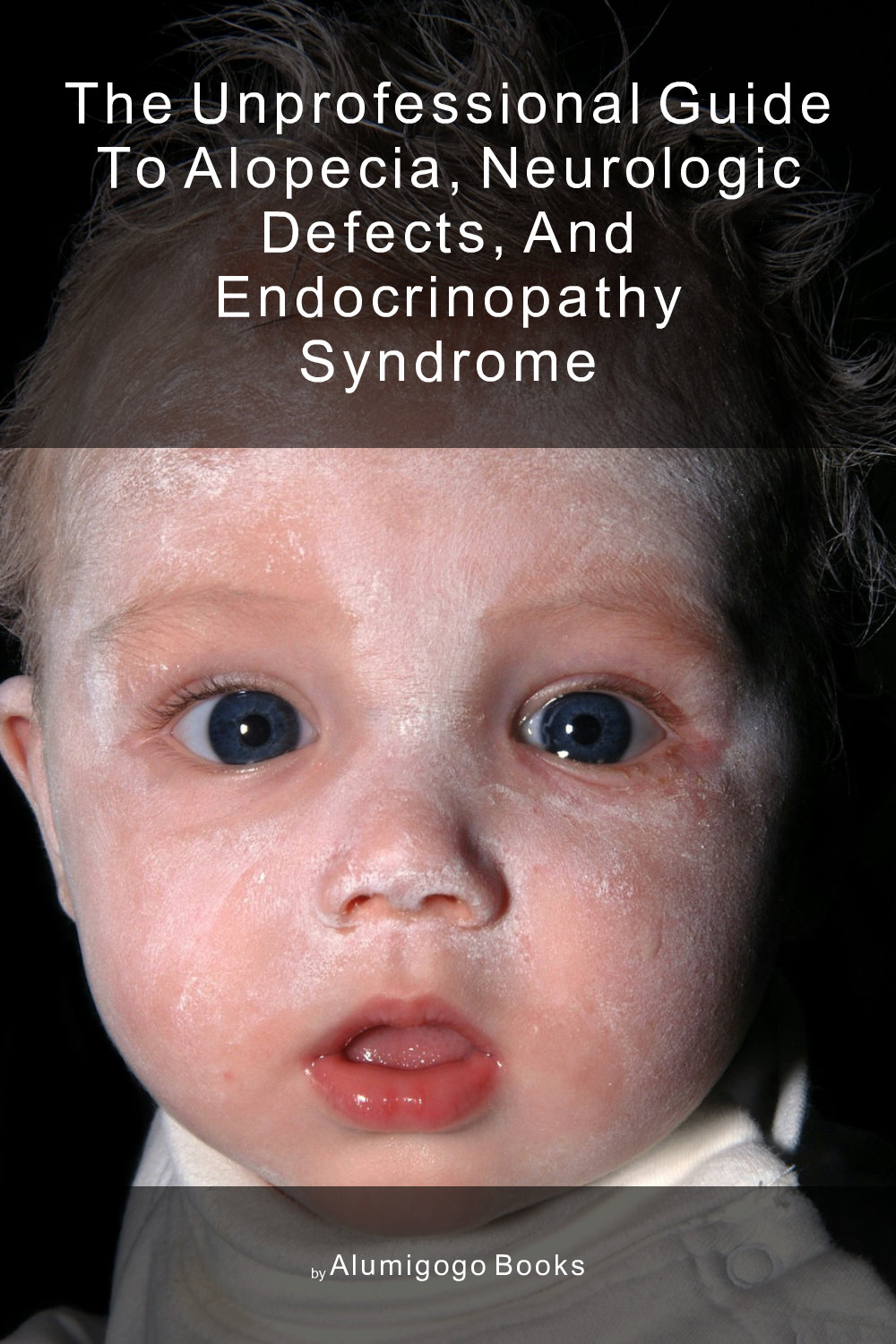
The Unprofessional Guide to alopecia, neurologic defects, and endocrinopathy syndrome
What You Need to Know — For Informational Purposes Only. A Plain-Language Guide for Patients and Caregivers
★★★★★3.7 · 6 reviewsby Alumigogo Books
non-fiction
The honest, plain-language guide to a scary diagnosis. No jargon. No false hope. Just what you need to know to face what comes next.
🔒Secure checkout via Stripe
✓30-day money-back guarantee — not right for you? Full refund, no questions asked.
Fall Festival Sale
$9
About this book
You just heard a mouthful of medical words strung together — alopecia, neurologic defects, and endocrinopathy syndrome — and now you are sitting there wondering what on earth that means for your life. Maybe you are the one with the diagnosis. Maybe you are the parent or partner holding the hand of someone who got the news. Either way, the internet is overwhelming, the doctor's office was a blur, and you need someone to just talk to you like a human being about what is actually going on.
This guide does exactly that. It breaks down what the syndrome means — hair loss, brain and nerve issues, and hormone problems — in plain language, with no shame and no sugar-coating. It walks you through what you might feel, how the diagnosis happens, what your treatment options really look like, and how to live your day-to-day life without the diagnosis becoming the only thing about you. You will also find practical advice for caregivers, so the people who love you can support you without falling apart themselves.
This is not a medical textbook. It is not a substitute for your doctor, and it absolutely will not give you medical advice. What it will give you is clarity, a game plan, and the feeling that you are not stumbling through this alone. Whether you are two days past the diagnosis or two years in, this guide is written for you.
Reader Reviews
Michelle Allen
★★★★★I appreciated that this book made an effort to be warm and accessible, but I honestly found it a little too basic in places. I have been living with this syndrome for three years already, so some of the 'what is happening' parts felt like review. The chapter on caregiver burnout was genuinely helpful for my husband, though. If you are brand new to this diagnosis, this is probably a fine starting point. For me, it just didn't go deep enough.
Barbara Lopez
★★★★★I bought this for my sister right after her diagnosis, and we read the first chapter together. It finally made the name of the syndrome actually make sense. I think the best part is how it does not sugar-coat things, but also does not make you feel doomed. The symptom table in chapter three is something I have gone back to a dozen times already. It is exactly what we needed when we were drowning in medical words.
Gary Clark
★★★★★As a dad trying to understand what my son is going through, I really connected with the caregiver chapter. The checklist for what to say and what not to say felt like someone finally gave me a script. I have to be honest, the first chapter had me tearing up a little — it just felt like someone was talking directly to me, explaining things in plain English instead of treating me like I was stupid for not knowing medical terms.
Kenneth Carter
★★★★★The tone was okay, I guess. I understand the author was trying to be friendly and all that, but sometimes it felt like it was trying too hard. The medical information is solid — I verified a lot of it with my own neurologist, and it checks out. I just wanted a bit more scientific detail in places, and less 'you got this, champ' energy. Decent for a patient guide, but not the definitive resource I was hoping for.
Ryan Johnson
★★★★★This guide literally changed how I approached my diagnosis. I was spiraling after my first appointment, Googling every terrible thing. Then I read this, and the first chapter made me stop and actually breathe. It said plainly what was happening in my body, why it happens, and that it was not some cosmic punishment for something I did. The questions to ask your doctor in the last chapter are gold. I took the list to my next appointment and finally felt like I was in control, not the disease.
Nancy Harris
★★★★★Useful chunks here and there, but I found the writing a little scattered. I think there are some solid practical tips in the day-to-day chapter — especially around fatigue — but I wish the book had spent more time on the endocrinopathy side of things. My case involves a lot of thyroid issues that barely got a mention. It is a decent starting point if you are clueless, but I was hoping for more specifics. It is fine for what it is, I guess.