The Unprofessional Guide to prolidase deficiency
What You Need to Know — A Plain-Language Guide for Patients and Caregivers (For Informational Purposes Only)
★★★★★3.6 · 8 reviewsby Alumigogo Books
non-fiction
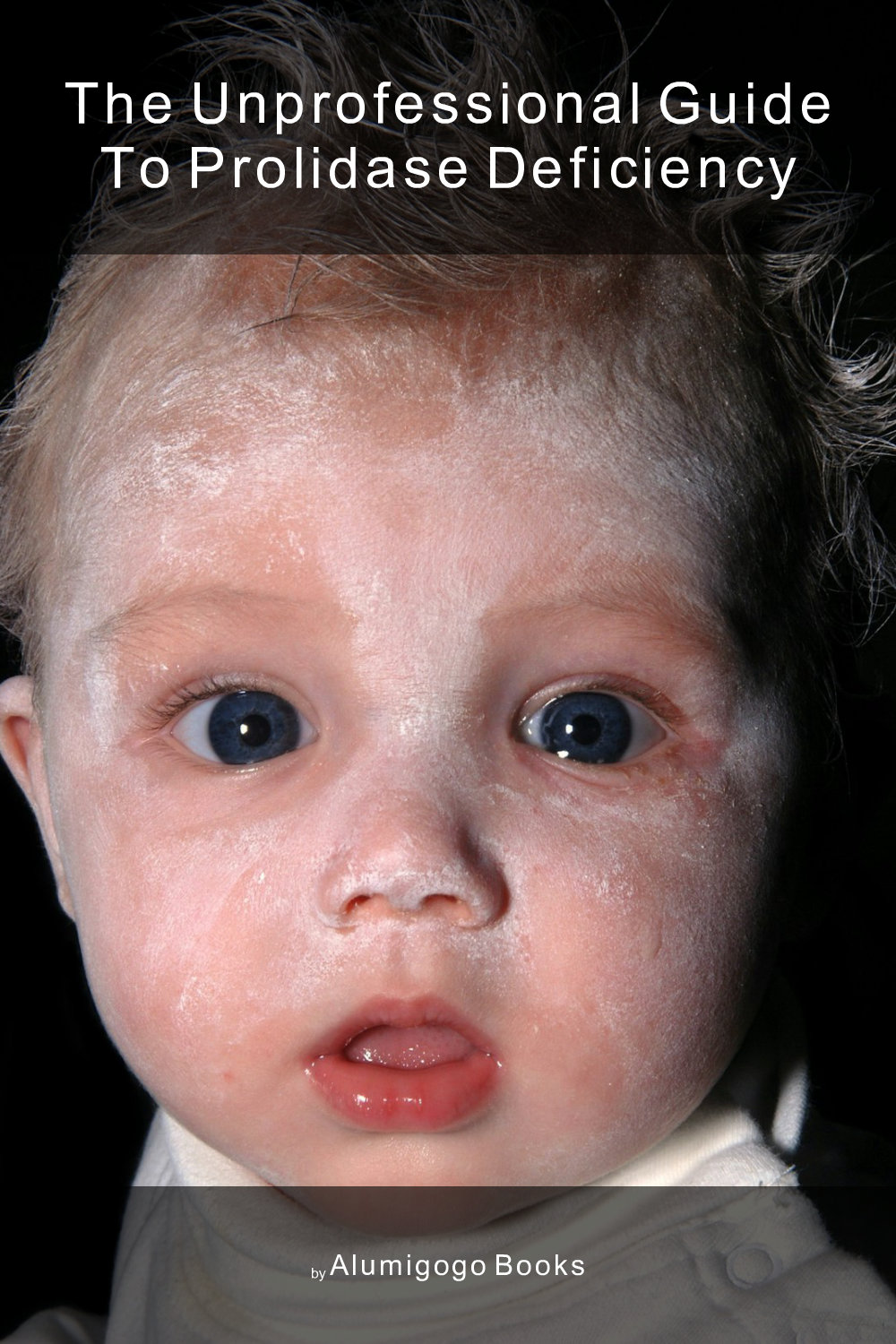
The Unprofessional Guide to prolidase deficiency
What You Need to Know — A Plain-Language Guide for Patients and Caregivers (For Informational Purposes Only)
★★★★★3.6 · 8 reviewsby Alumigogo Books
non-fiction
Just diagnosed? Scared? This guide explains prolidase deficiency in plain language — no jargon, no doom-scrolling. What it is, what to expect, and how to cope.
🔒Secure checkout via Stripe
✓30-day money-back guarantee — not right for you? Full refund, no questions asked.
Fall Festival Sale
$9
About this book
So, you've just been handed a diagnosis of prolidase deficiency. Your doctor used a lot of words you didn't quite catch, and now your brain is buzzing with questions, fears, and a million tabs open on your phone. This guide is the calm, knowledgeable friend you need right now. It cuts through the medical clutter and explains exactly what's going on in your body, in language that makes sense. It answers the big, scary questions — 'What does this mean for me?' and 'What happens next?' — with honesty and warmth, without painting a rosier picture than reality or falling into doom and gloom.
Inside, you'll find a chapter-by-chapter breakdown of the condition: the genetics behind it, the symptoms you might experience, how doctors confirm the diagnosis, and the real-world trade-offs of the treatment options available. But we don't stop at the clinical stuff. This guide is just as much about living with the condition as it is about treating it — from managing skin ulcers and fatigue, to navigating work and relationships, to supporting a loved one without burning out yourself.
Written for patients and caregivers, this is not a medical textbook and it is not medical advice. It's a companion. It's here to help you understand your reality, prepare for appointments with confidence, and take back some control in a situation that can feel incredibly out of control. You are not alone in this, and this book is your proof.
Reader Reviews
Ryan Sanchez
★★★★★I got the call about my son's diagnosis on a Tuesday and spent the whole week in a fog. This guide was the first thing that made sense. It doesn't read like a medical journal — it reads like a friend explaining things over coffee. Chapter 1 alone helped me understand what's actually broken in his cells, which was more than any doctor had managed to communicate. I only wish it had more specific advice about the emotional rollercoaster, but honestly, it calmed me down when I needed it most.
Donna Gonzalez
★★★★★As a mum of a 9-year-old with prolidase deficiency, I thought I knew everything I needed to know. I was wrong. This book put words to things I'd only seen in medical charts. The symptom table in Chapter 3 was a lifesaver — it helped me realize she's on the milder end of the spectrum. It's practical, honest, and doesn't sugarcoat anything. I docked a star because I wanted more detail on the long-term prognosis, but I'll be re-reading it before every specialist visit.
Steven Thompson
★★★★★I appreciated that this guide didn't try to sell me a miracle cure or pretend everything's fine. It's straightforward, which I needed. The genetics chapter finally explained what 'autosomal recessive' means in a way I actually understood. That said, as a dad, I found some of the 'day-to-day life' advice a bit too focused on mental health and feelings — I just wanted the facts. Still, it's a solid starting point and I've lent it to my brother.
Nicholas Davis
★★★★★I bought this for my wife who was just diagnosed, and honestly, I think I got more out of it than she did. The caretaker chapter (Chapter 7) is the reason I can write this review with a clear head. It gave me practical tips on wound dressing and also warned me about the signs of caregiver burnout. It's not a perfect book — some sections felt repetitive — but if you're the partner or parent of someone with a rare disease, it's a good thing to have on the shelf.
Matthew Wright
★★★★★This is a decent book, but I had high hopes after the description. It talks a lot about skin ulcers and wound care, which is accurate for many of us, but I was hoping for more about the other symptoms, like the joint pain and fatigue. Chapter 1 is great for a total beginner, but if you've already done a few web searches, you might find it a bit basic. Still, I appreciated the tone — it's warm and not scary. I'd recommend it for the glossary-like clarity.
James Thomas
★★★★★The day we got the diagnosis, I was given a pamphlet that was basically a legal disclaimer. This guide is the complete opposite. It speaks to you like a human being. I loved that it admitted what doctors don't tell you — that there's a lot of uncertainty. The 'Questions to Ask Your Doctor' chapter was brilliant, and I brought it with me to our first appointment at a university hospital. It genuinely made me feel more in control of a situation where I had felt powerless. Very grateful for it.
Brenda Flores
★★★★★I cannot recommend this enough. My daughter was diagnosed at age 3, and I've spent years collecting scraps of information from medical websites, none of which spoke to me as a parent. This book is a lifeline. It explains the science clearly, but more than that, it validates the emotional weight of the journey. The chapter on 'Why Did This Happen?' made me cry — in a good way. It finally convinced me that I didn't cause this, which I'd been holding onto for years. A must-read for any family facing this diagnosis.
Sharon Baker
★★★★★It's a helpful book overall. I like that it's informational only and doesn't tell you what to do, because everyone's case is so different. The section on wound care was useful, and the checklist of questions for the doctor is a nice touch. It's not the most deep-dive you'll ever read, and I wish it had more pictures or diagrams to explain the skin stuff, but for what it is — a concise, friendly guide — it works. I'm keeping it by my bedside.