The Unprofessional Guide to VEXAS syndrome
A Plain-Language Guide for Patients and Caregivers — What You Need to Know, What to Expect, and How to Live Your Life (For Informational Purposes Only — Not Medical Advice)
★★★★★4.2 · 6 reviewsby Alumigogo Books
non-fiction
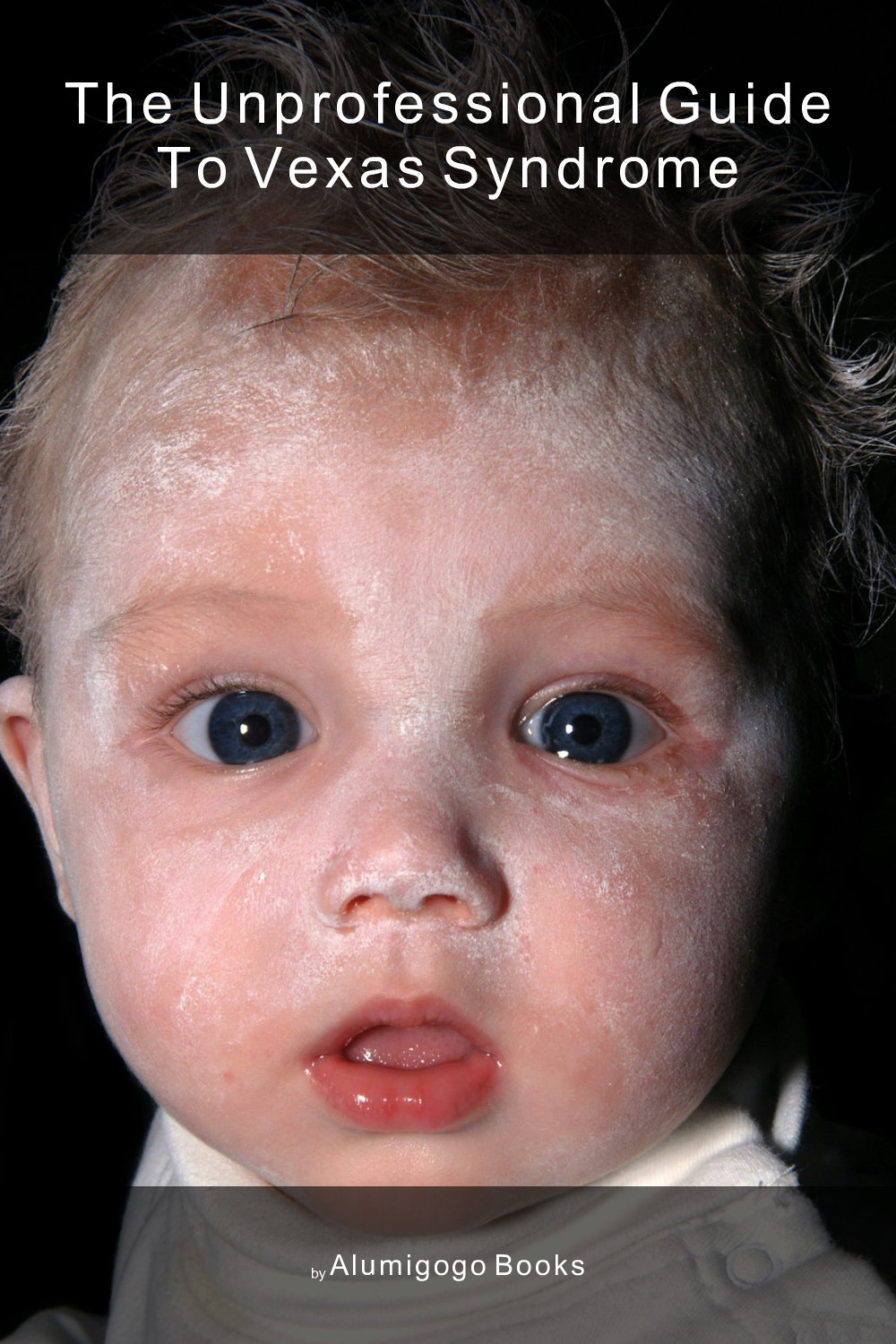
The Unprofessional Guide to VEXAS syndrome
A Plain-Language Guide for Patients and Caregivers — What You Need to Know, What to Expect, and How to Live Your Life (For Informational Purposes Only — Not Medical Advice)
★★★★★4.2 · 6 reviewsby Alumigogo Books
non-fiction
You just got a diagnosis that's hard to pronounce. This guide makes it possible to understand — and to live well anyway.
🔒Secure checkout via Stripe
✓30-day money-back guarantee — not right for you? Full refund, no questions asked.
Fall Festival Sale
$9
About this book
When you hear the words 'VEXAS syndrome' for the first time, your brain does a funny, awful thing: it scrambles. This is a rare, newly-discovered disease. You've probably never heard of it. Neither have many doctors. And yet here you are, expected to absorb information that sounds like a secret code, make treatment decisions, and somehow keep living your life all at once.
This guide is not a medical textbook and it's not a doom scroll. It's the book we wish someone had handed us at the moment of diagnosis — something that says, 'Okay, here's what we know, here's what we don't know, and here's how to get through this without losing yourself.' Written in warm, honest, plain language, it walks you through what VEXAS syndrome actually is, what you'll feel, how doctors diagnose it, what your treatment options really look like, and how to handle day-to-day life when your body has become an unpredictable roommate.
Whether you're the patient or the person standing next to them, this guide gives you language, a roadmap, and the occasional moment to laugh at the sheer absurdity of it all. It does not give medical advice — it gives you the knowledge and confidence to work with your medical team, ask the right questions, and make the choices that fit your life.
Reader Reviews
Timothy White
★★★★★I was diagnosed three weeks ago and my brain has been static since. This book was the first thing that made me feel like I wasn't in a foreign country without a translator. The chapter on what's actually happening in my body finally made sense — I even explained it to my wife using the car engine analogy. Four stars only because I wished it had more detail on pain management, but honestly, this is the most helpful resource I've found.
Laura Martin
★★★★★As a caregiver, I've read more medical articles than I care to admit, and most of them left me more confused than before. This guide is different. It doesn't talk down to you, but it also doesn't assume you have a medical degree. I appreciated that there was no false hope — just honest information. The caregiver chapter made me feel seen. My husband is doing better now that we both understand this better.
Edward Martin
★★★★★My father was told he had VEXAS syndrome in March. We felt lost — the doctors used words that sounded like a different language. This book is like having a knowledgeable friend who happens to read medical journals. My favorite part was the Questions to Ask Your Doctor section. I literally brought it to our last appointment and the doctor seemed genuinely impressed. It gave us back a sense of control we thought we'd lost forever. I can't recommend this enough.
Carol Martinez
★★★★★This is the book I needed when my sister was diagnosed six months ago. The tone is warm without being saccharine, honest without being bleak. I read the whole thing in one night, then immediately shipped it to my mom. The chapter on day-to-day life — especially the section on what to tell people — was worth the price alone. Knowing we're not alone in this makes it less scary. Five stars, absolutely.
Matthew Flores
★★★★★It's decent for what it is — educational, clear, and definitely better than the terrifying web searches I was doing at midnight. The symptom table was genuinely useful. But I found some of it too general for my situation, and I wish it had gone deeper into the newer research and clinical trials. I also wanted more on diet interactions, which were only briefly mentioned. Still, if you or a loved one just got diagnosed, it's a solid first step. Three stars — it's a starting point, not a complete answer.
Michael Lewis
★★★★★I'm a 62-year-old man who never reads books about health. My wife bought this and put it on my nightstand, and I begrudgingly opened it. I'm glad I did. The chapter on why this happened was the first time I stopped feeling like I'd done something wrong. It's not preachy, it's not too soft — it's just clear and reassuring in a way that finally made sense to me. I've already loaned it to my brother because he needed to understand what I'm going through. Four stars from me, and I'm a tough critic.